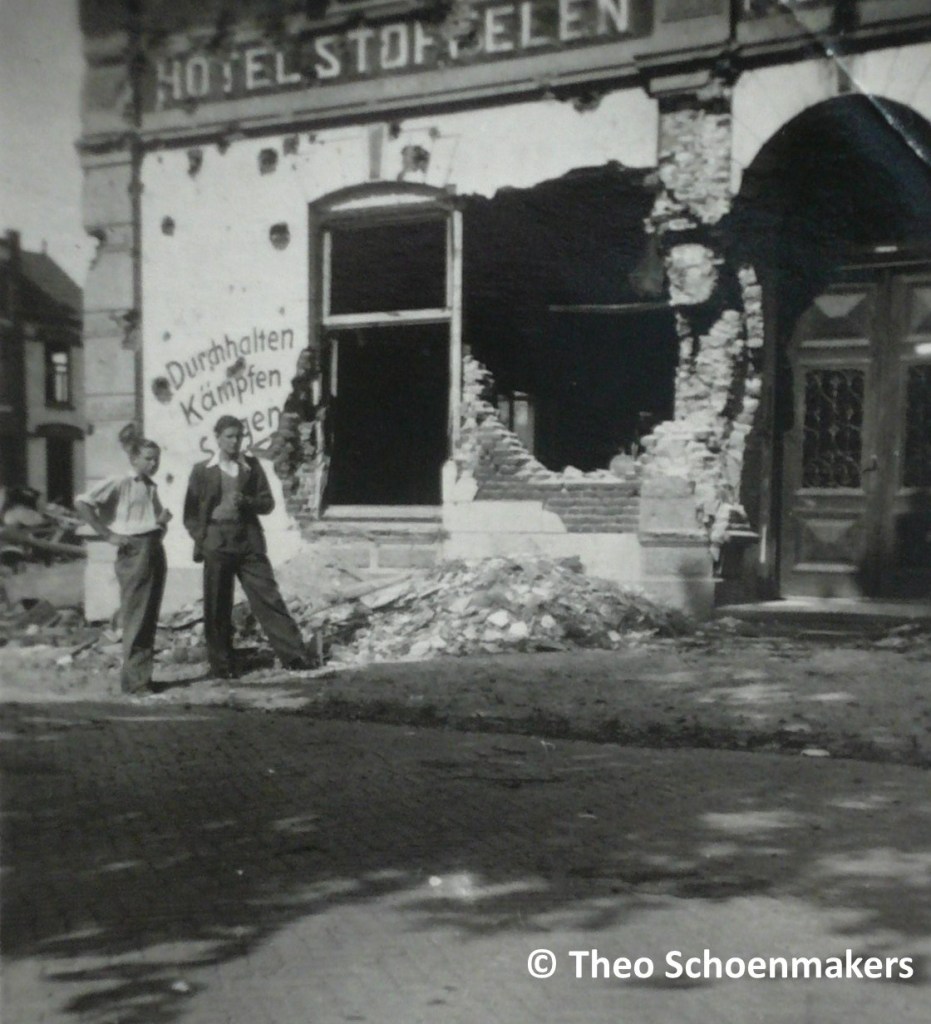
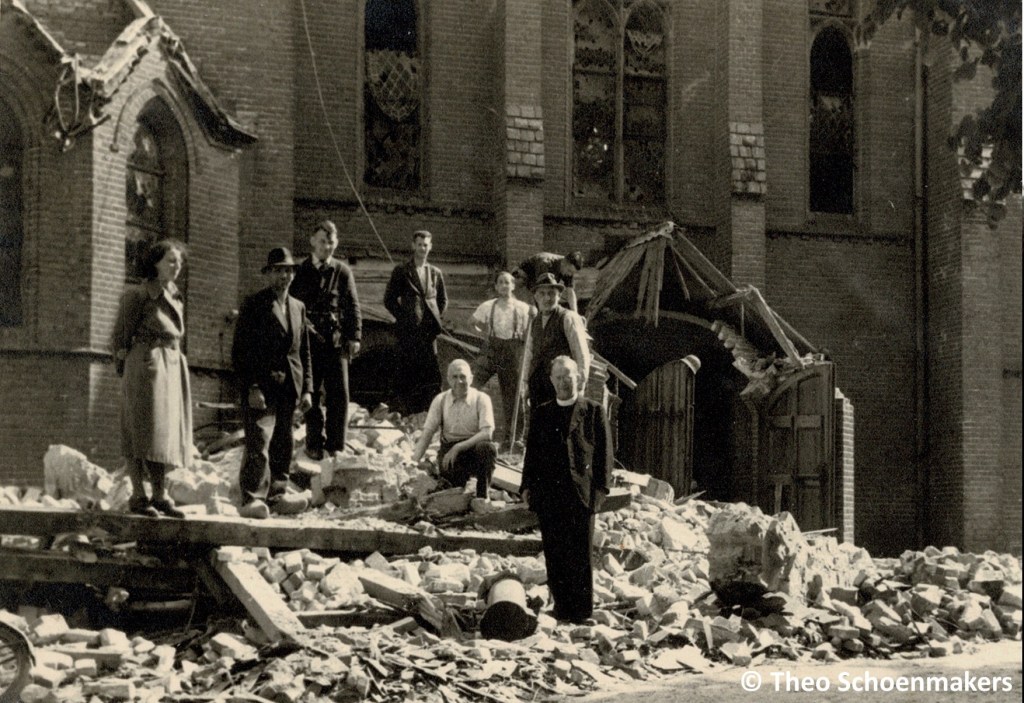
In mid-April, the first residents of Millingen slowly returned to Millingen. During the journey to Millingen, many people did not know in what state they would find their village or home. It soon became clear that the destruction was indescribable. Many houses were destroyed, and some had received direct hits. Many houses in Millingen had been booby-trapped. One had to be very careful not to step somewhere carelessly or suddenly pull open a door. Many houses had been looted by both the Germans and Canadians, meaning that all the belongings people had left behind were gone. Some people had buried items in their gardens before the evacuation, but due to the high water, these floated back to the surface. The animals had all been set free before the evacuation, and many had drowned due to the high water. There was therefore no pleasant smell in Millingen. In many cellars, the water level was still high. All houses in Millingen had no windows anymore due to the shelling and the high water. Soon, the Red Cross Relief Action (HARK) arrived in Millingen with relief goods. They brought, for example, basic items such as tables and chairs. Before the evacuation, the shipyard had lent steel plates for the construction of air raid shelters. These now had to be returned to the shipyard. The stones from the church tower and the pension (JMJ) were reused for the reconstruction. The last soldiers who helped with the reconstruction of the village and the shipyard stayed in the St. Jozef patronage building, Sobiëtas.
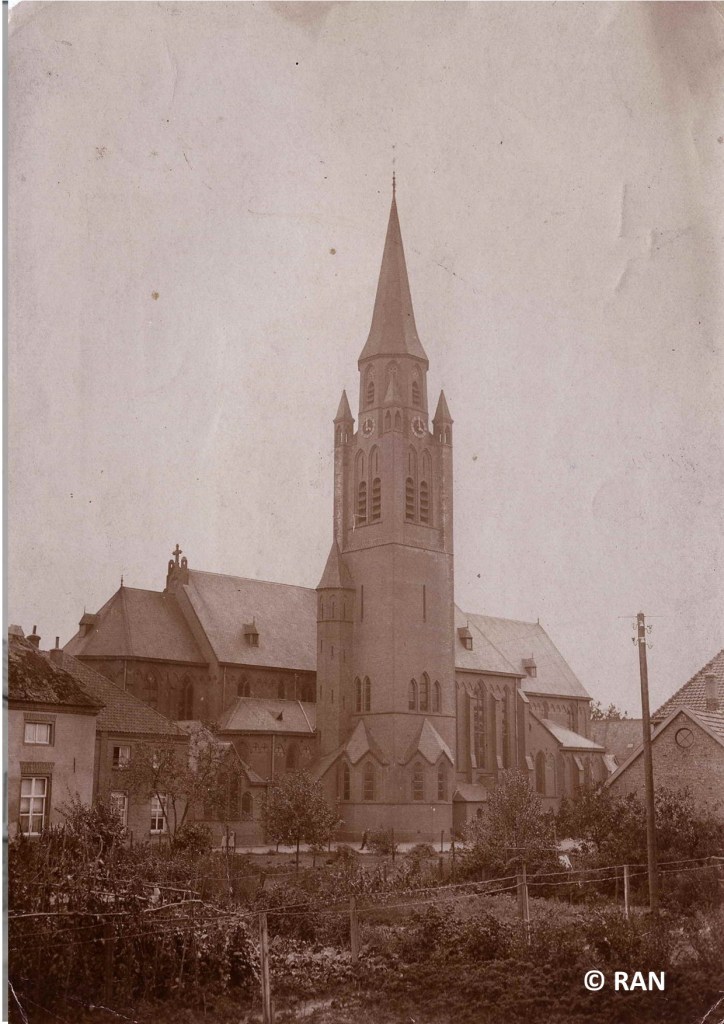
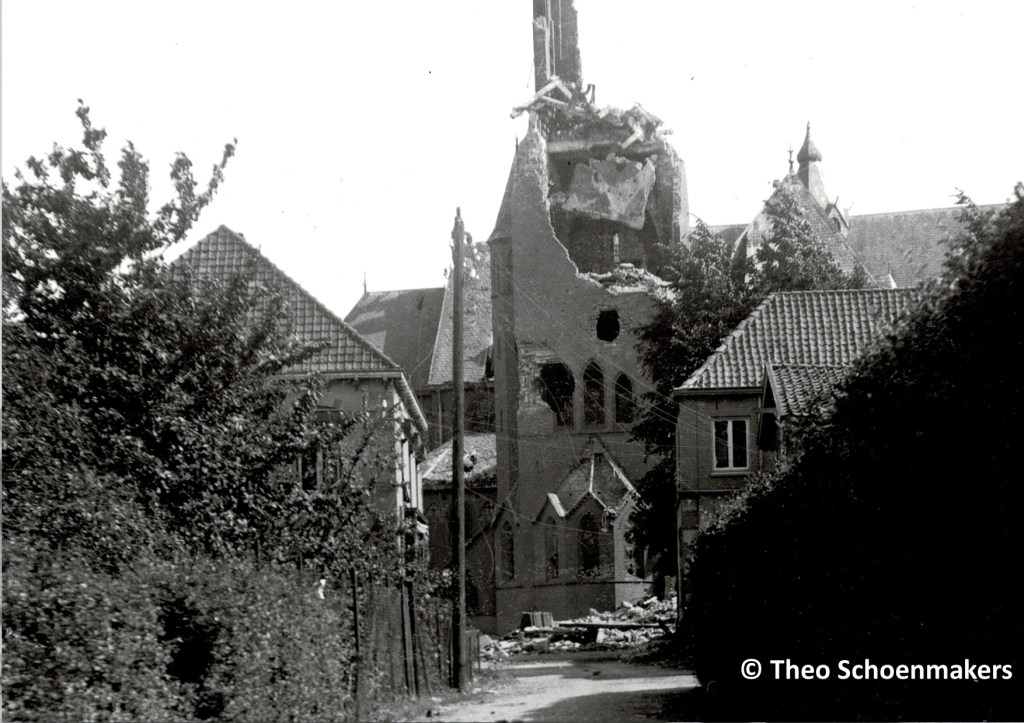
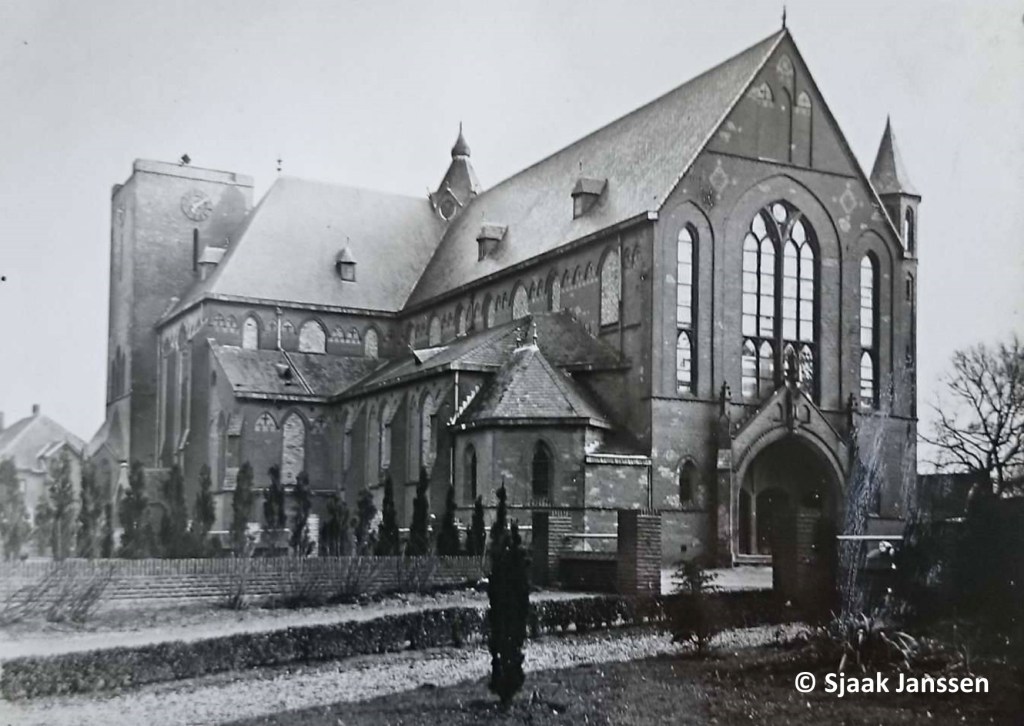
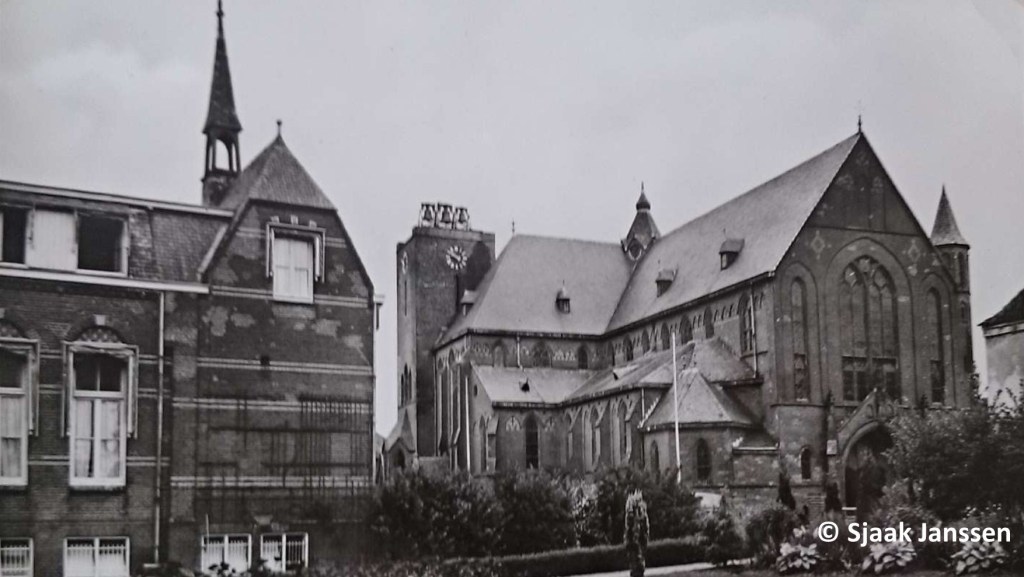
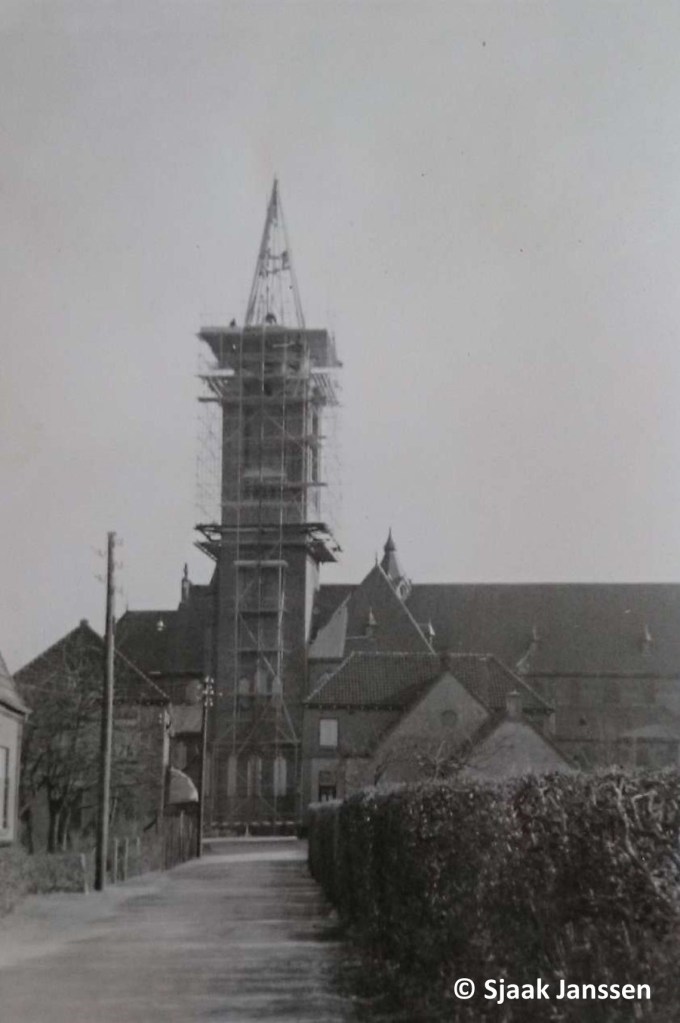
The church tower had been heavily damaged during the war by a shell. When exactly the church tower was hit is not known. It was probably hit in early April, because at that time Operation Destroyer was taking place on the other side of the Rhine. Artillery guns set up in Berg en Dal were firing across the river. It was likely that a dud shell hit the church tower at that time. The damage to the tower was severe. Reconstruction progressed slowly. It was not until 1955 that the tower was restored, but not to its original state.
Casualties after the war.
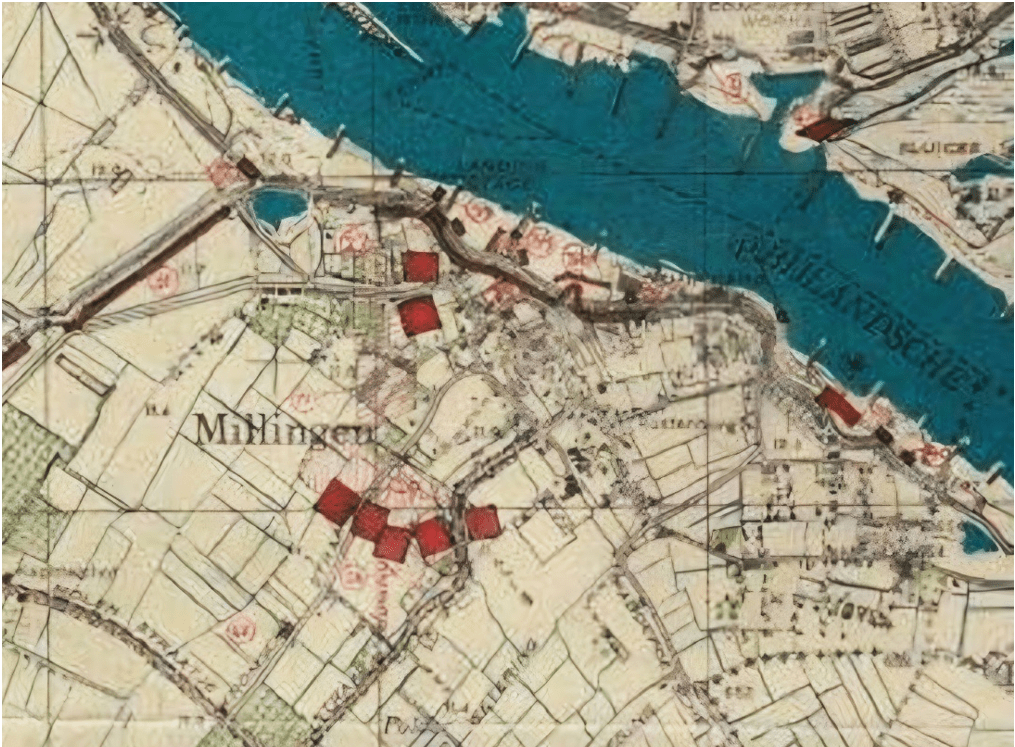
When the people of Millingen returned to Millingen after the evacuation, they encountered a lot of ammunition left behind by the Germans and Canadians. There were also minefields and booby traps in Millingen. One therefore had to walk in the middle of the road, as that was the safest. Soon, the minefields were cleared by German prisoners of war. They had to stick a rod into the ground to see if there was a mine. There were also injuries during this work. Sometimes they had missed a mine, and these were only found a few years after the war.
Many boys played with weapons and ammunition after the war. There were several incidents in Millingen in which people clamped grenades or mortars in a vice in the shed, tried to dismantle them, and they then suddenly exploded.
Liberation Festival.
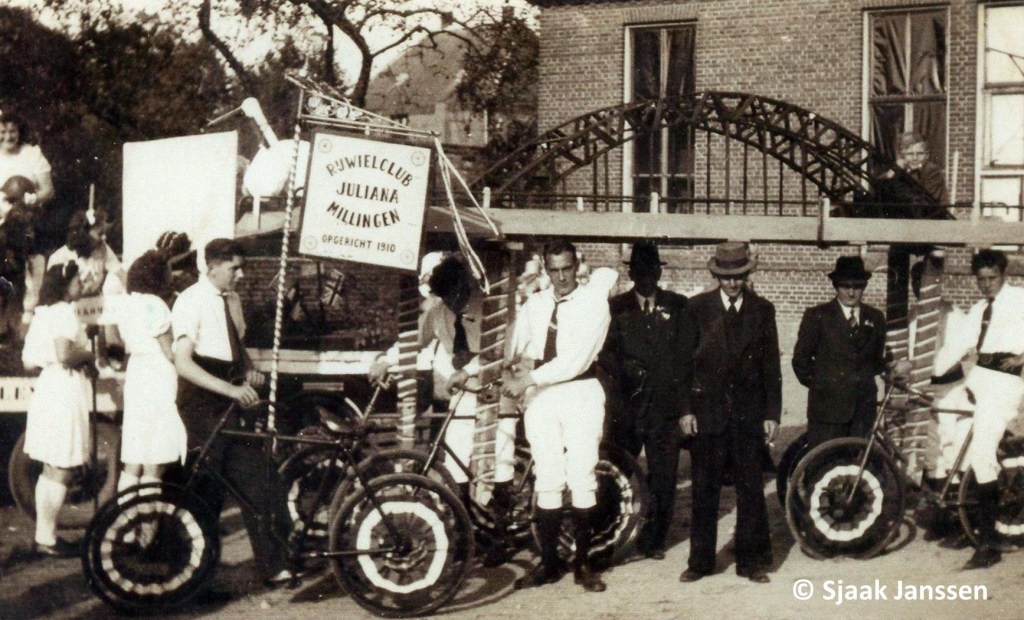
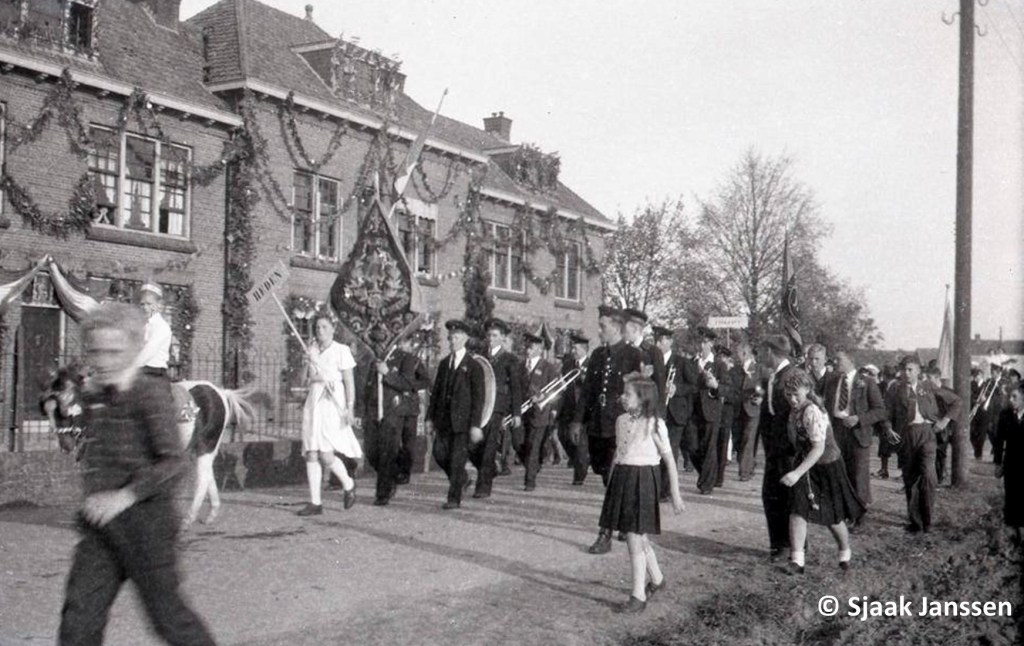
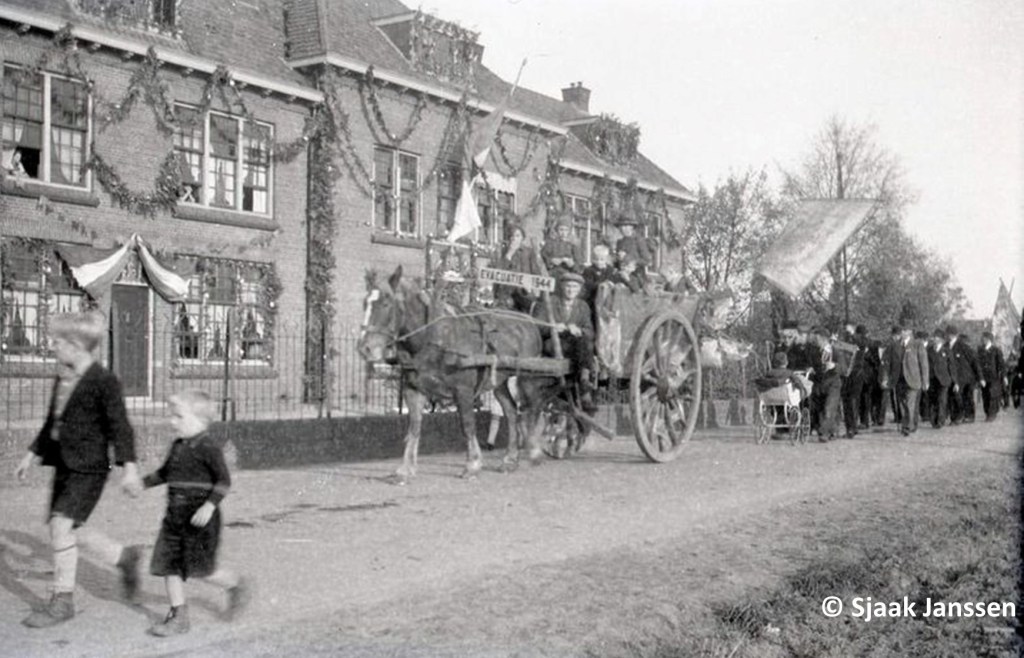
Liberation festivals were organised on 20, 21, and 22 October 1945. That was exactly one year after the evacuation. On those days, the liberation of Millingen was celebrated exuberantly. The programme had been prepared with a lot of music. The revellers could gather in the building of O.E.V., O.E.V.1, and in Café Verkerk. On 20 October, after Holy Mass, a wreath was laid on the graves of the Allied airmen who had crashed in Millingen on the night of 9 to 10 January 1941. In the afternoon, there was a parade through the village. The next day, the programme continued with a football match. On the last day, the victims who had died during the evacuation were commemorated, and in the afternoon, games were played with the children.
Sources: Thea de Roos-van Rooden and Private archive of Siem van der Kolk.
 Millingen in oorlogstijd
Plaats een reactie