The Air Raid on Millingen.
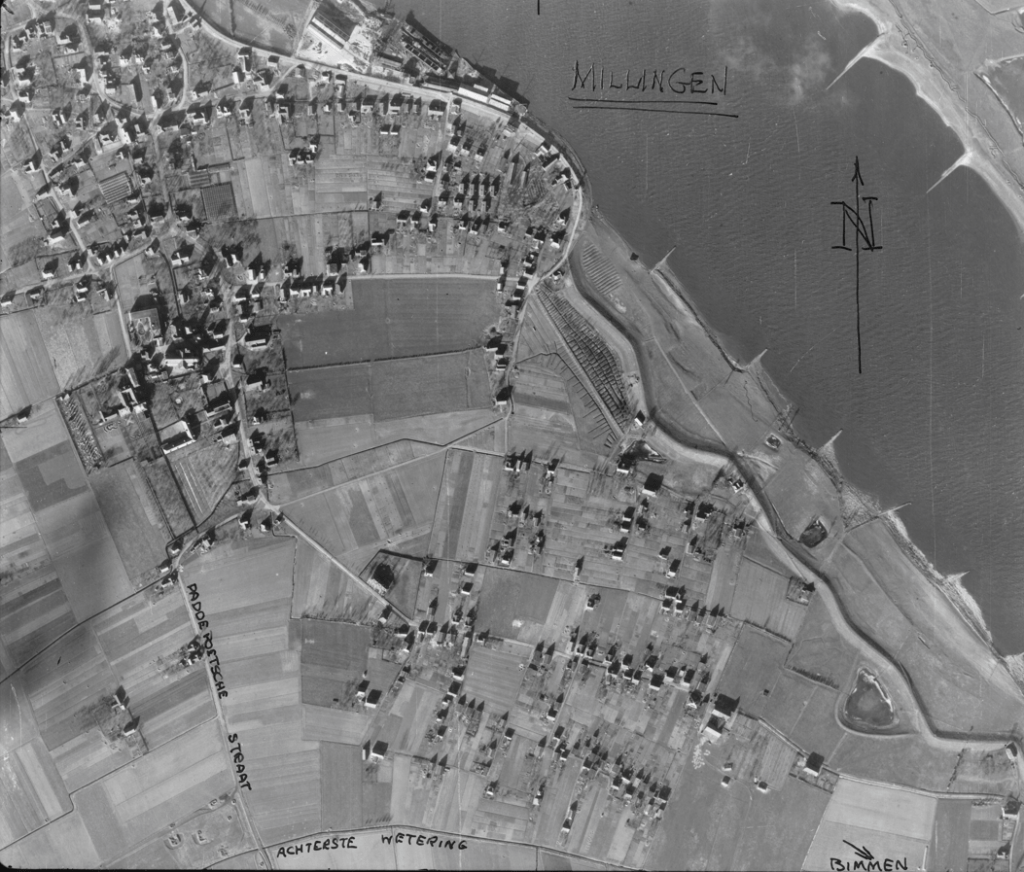
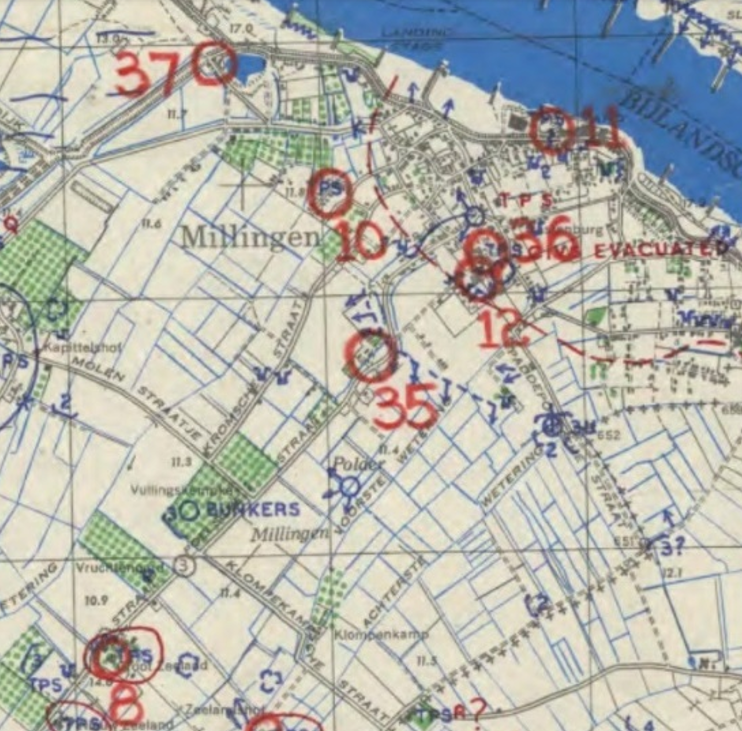
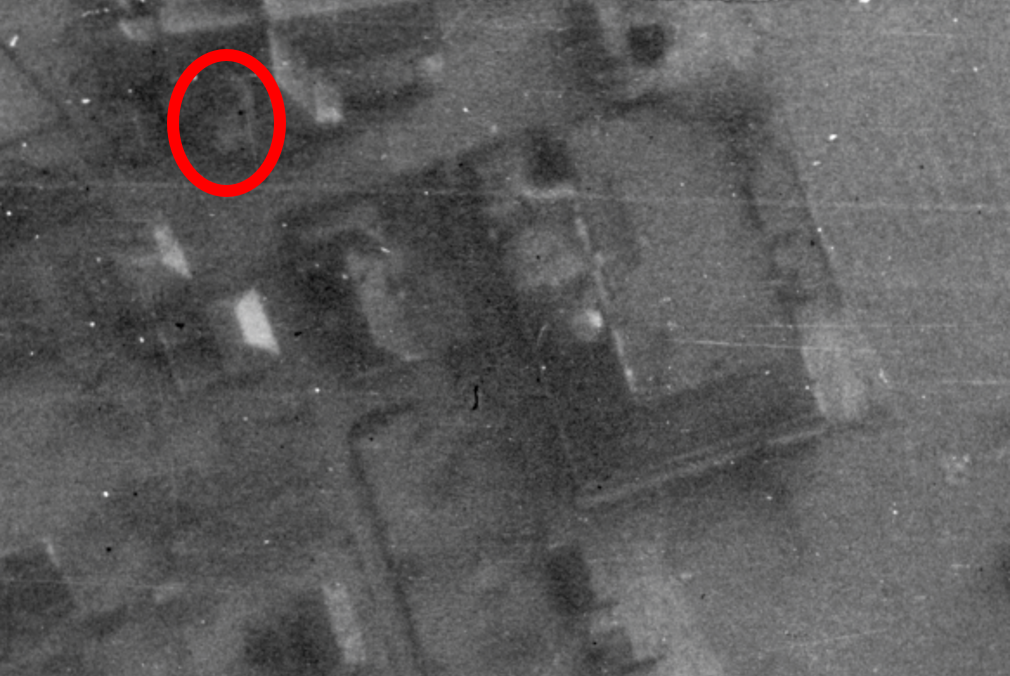
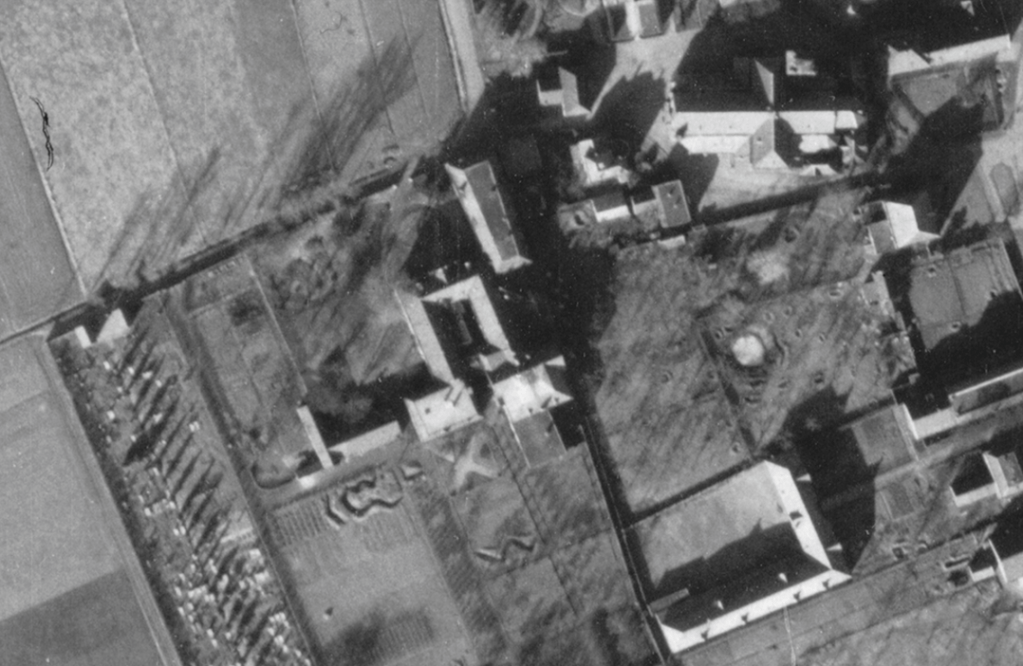
On 3 February 1945, the RAF carried out reconnaissance flights over the front area, including Millingen. During the preliminary reconnaissance, they took several aerial photographs of Millingen. These aerial photographs were used to mark their targets on a map. The map coordinates of the targets were indicated with an accuracy of 10 metres. They had marked dozens of targets across the entire area. Around and in Millingen itself, there were 7 targets.
The 7 targets:
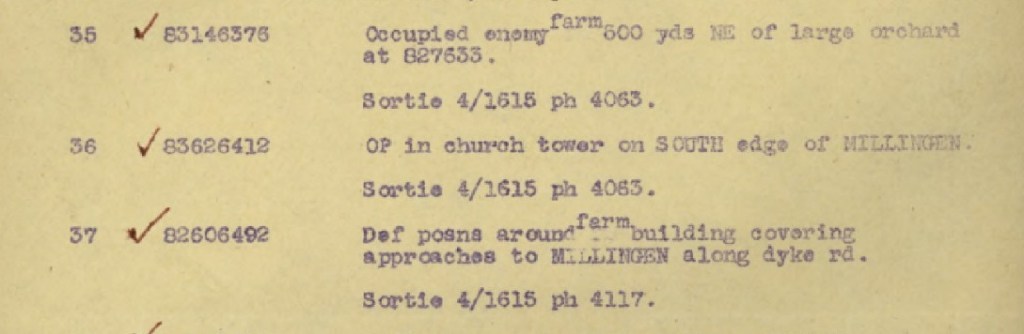
- No. 37. House of Herfkens near the Molenkolk, farm extending along the dike towards Millingen.
- No. 11. the shipyard,
- No. 10. Klein Amerika,
- No. 36. the church tower. The church tower contained a German observation post.
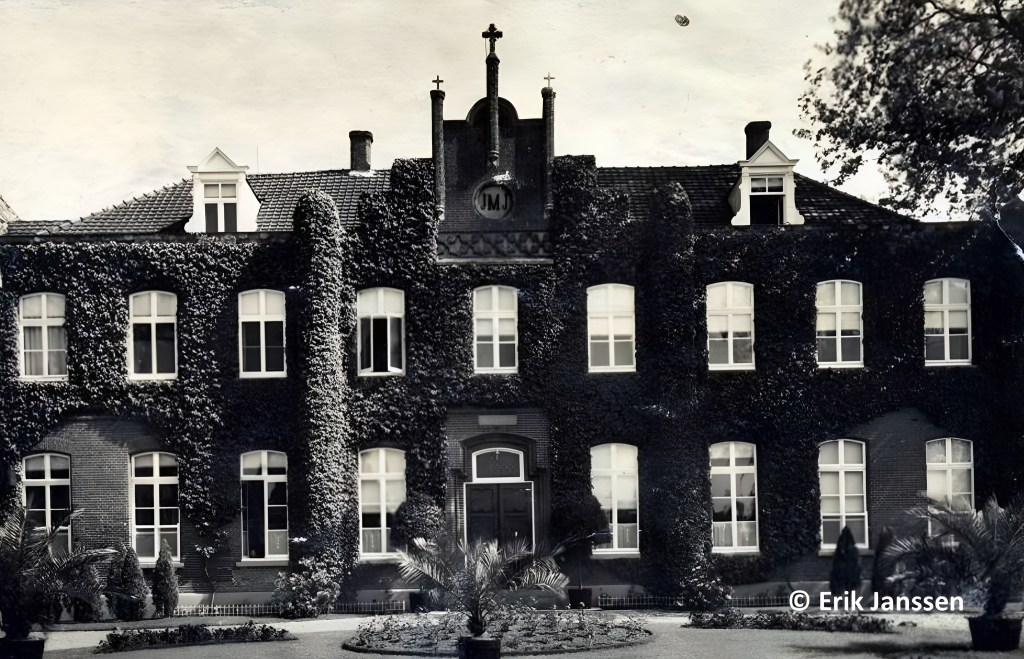
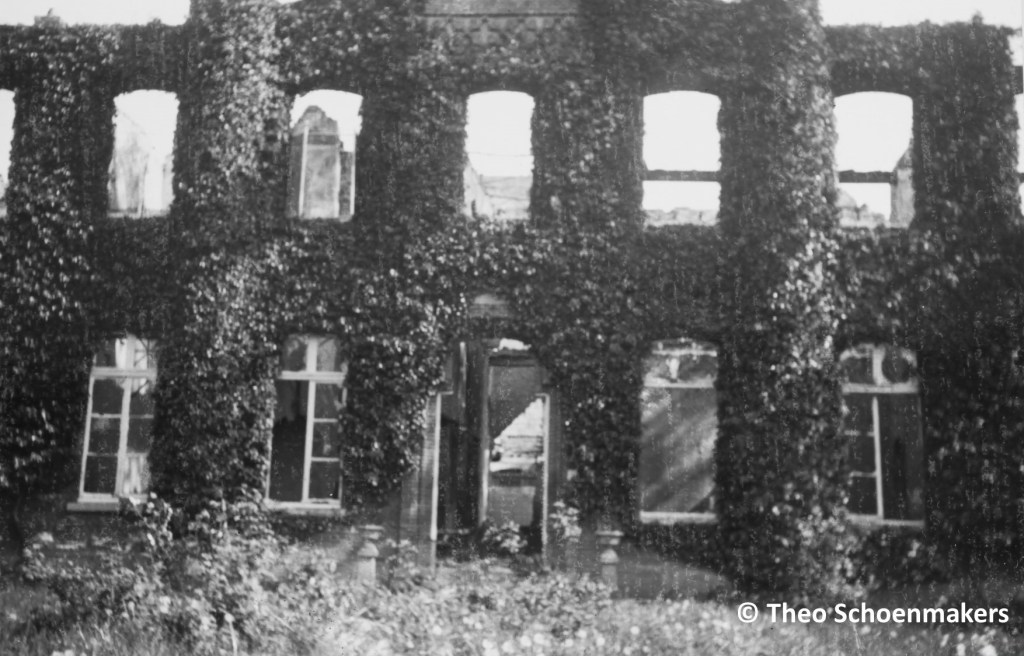
- No. 12. Pension du Sacré Coeur (JMJ). Building used for storage.
- No. 35. Farm opposite Zeelandsestraat 55. Occupied farm with a large orchard.
- No. 8. Farm at Zeelandsestraat 65. Occupied by approximately 30 Germans.



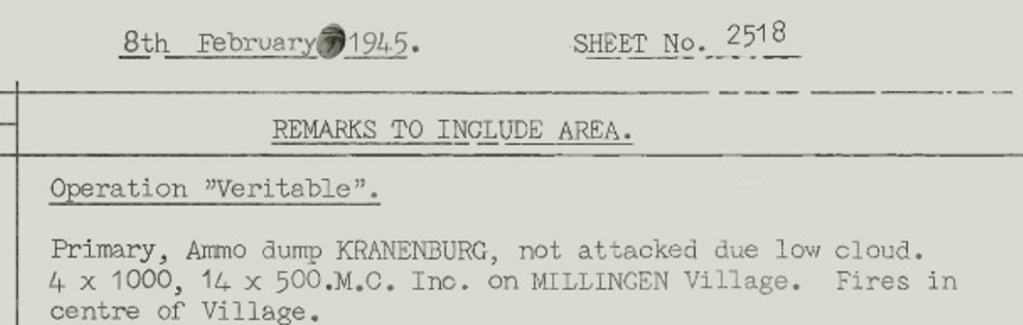
On 8 February 1945 at 08:20 hrs, fighter planes of the 2nd Tactical Air Force (84th Group, 4th Squadron) took off towards Kranenburg to attack the ammunition depots there. They soon found that the cloud cover over Kranenburg was too low to proceed with the attack. They therefore quickly searched for a second target, which turned out to be Millingen. The report of the 2nd Tactical Air Force states that a fire broke out in the centre of Millingen. What they probably saw was the Pension building that had received a direct hit and was on fire. Several houses on Dijkstraat were also hit. The church tower was not hit. In an aerial photograph from 14 February 1945, the tower can still be seen. Whether the other targets were hit is unknown.
Queen’s Own Rifles of Canada in action.
On 8 February 1945 at 05:00 hrs, the Queen’s Own Rifles (QOR) prepared to move to the assembly area at Ooij. During preparations, there was an hours-long artillery barrage, which was the prelude to Operation Veritable. At 12:00 hrs, the QOR received the signal to depart towards Ooij. They arrived at their assembly point in Ooij around 14:30 hrs, where they remained all day.
On the morning of 9 February 1945, they moved from Ooij towards Millingen. Company C reached the northern part of Millingen without resistance from the Germans. They took 10 German prisoners of war. At 14:30 hrs, Company A arrived in Millingen, which also encountered no resistance from the Germans and made contact with Company C. Around 15:30 hrs, Company B arrived in Millingen and captured 1 German soldier and 2 civilians. The companies gathered at the shipyard in Millingen, from where they took up defensive positions. Company D proceeded, according to plan, to comb through the houses in Millingen.
In the early morning of 10 February 1945, it was determined that Millingen was heavily flooded, because the Erlecomse dam and the Kapitteldijk had been blown up by the Germans in December. The Battalion Headquarters was located in Millingen’s town hall. At 12:00 hrs, it was reported that the water had risen 5 inches (12.7 cm) in the past 3 hours, and it continued to rise. The companies could no longer remain in the centre and had to move to higher ground. These were the houses situated on the dike. The high water caused problems, as all of Millingen was now under water. Heavy weapons could not be brought to Millingen, and supplies became more difficult, as everything had to be done with Buffalos. Of course, the water was not equally high everywhere in Millingen, but aerial photographs from the time show that there was water throughout the village. At 16:30 hrs, Company C moved to Bimmen. There was no resistance, only civilians remained. The civilians were ordered to stay indoors.
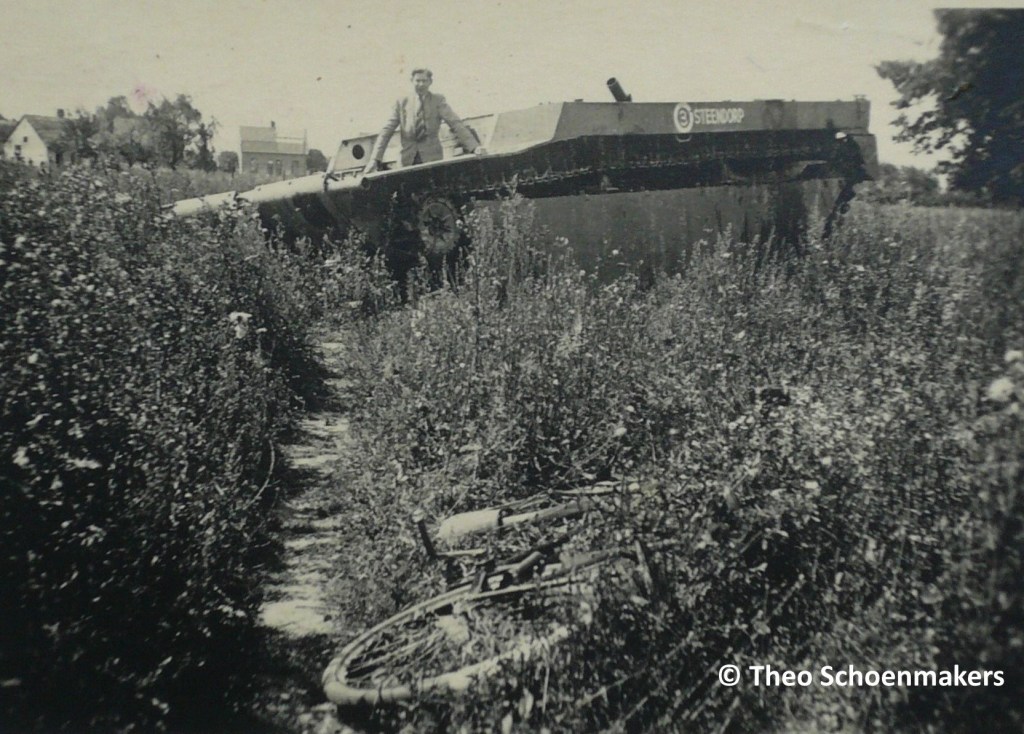
On 11 February at 08:00 hrs, it was reported that during the night the water had risen 2.5 feet (76.2 cm), making movement in the area possible only by boat. Company B went to Keeken to take up positions at the dike, where they had a good view of the Bijlandschkanaal. Company A captured 2 Germans and took over Company B’s former position at the shipyard. Across the river, the German artillery regiment “Elbe” appeared, which had been assigned to the 84th Infantry Division to replace Artillery Regiment 184.
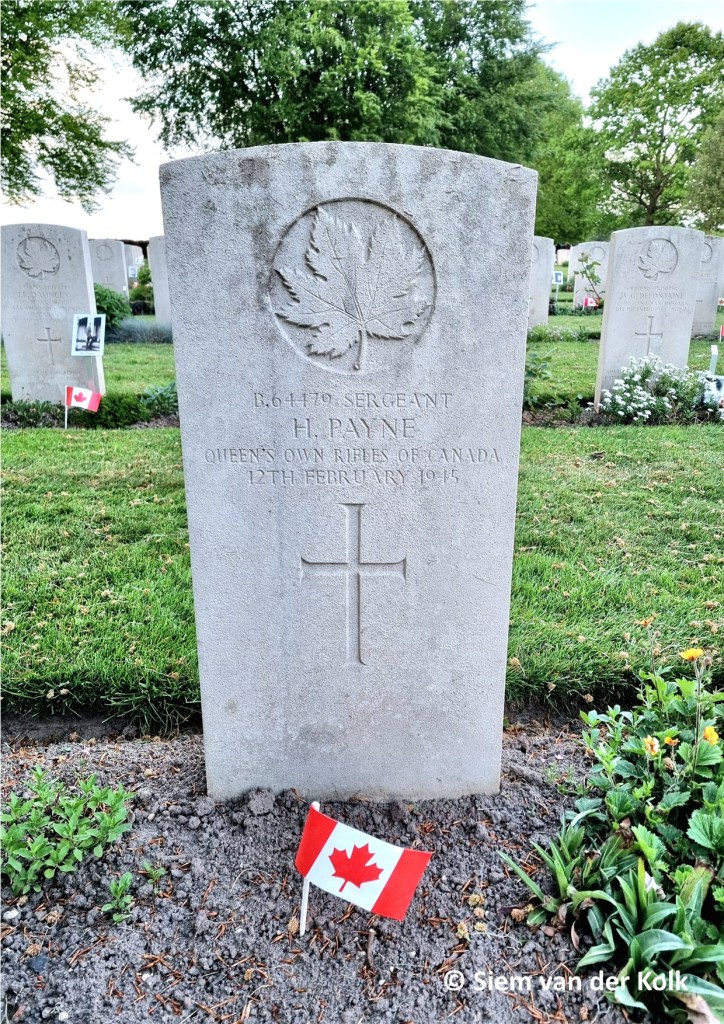
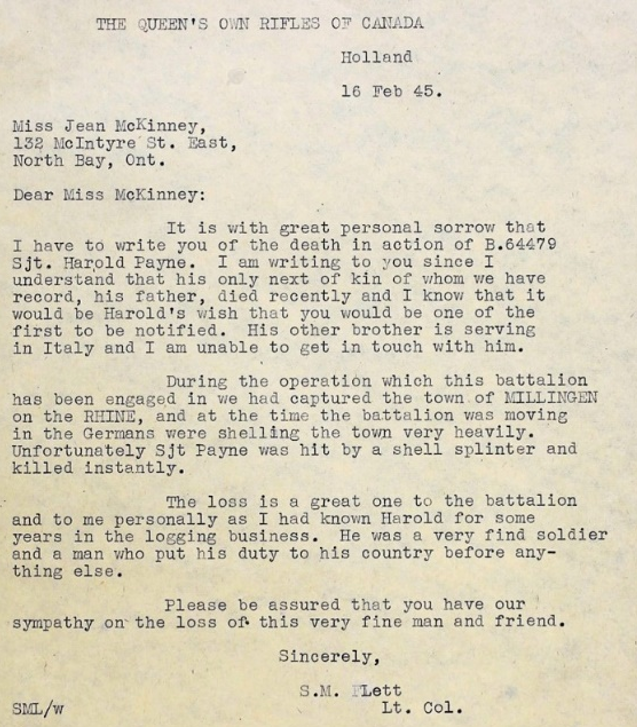
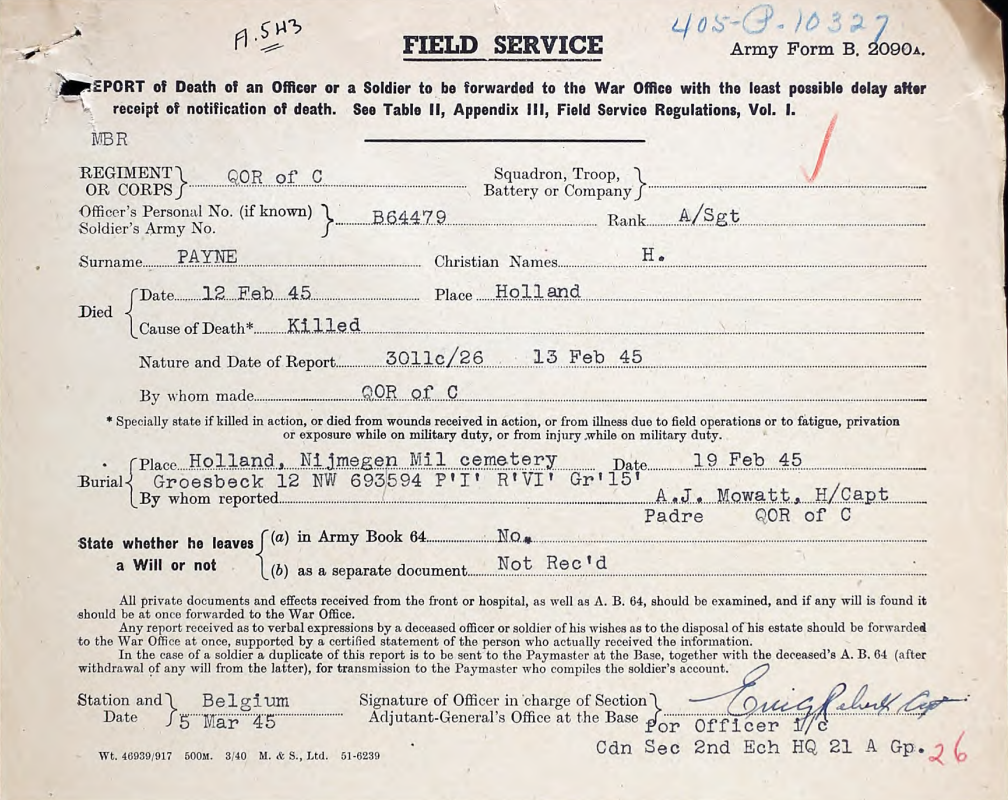
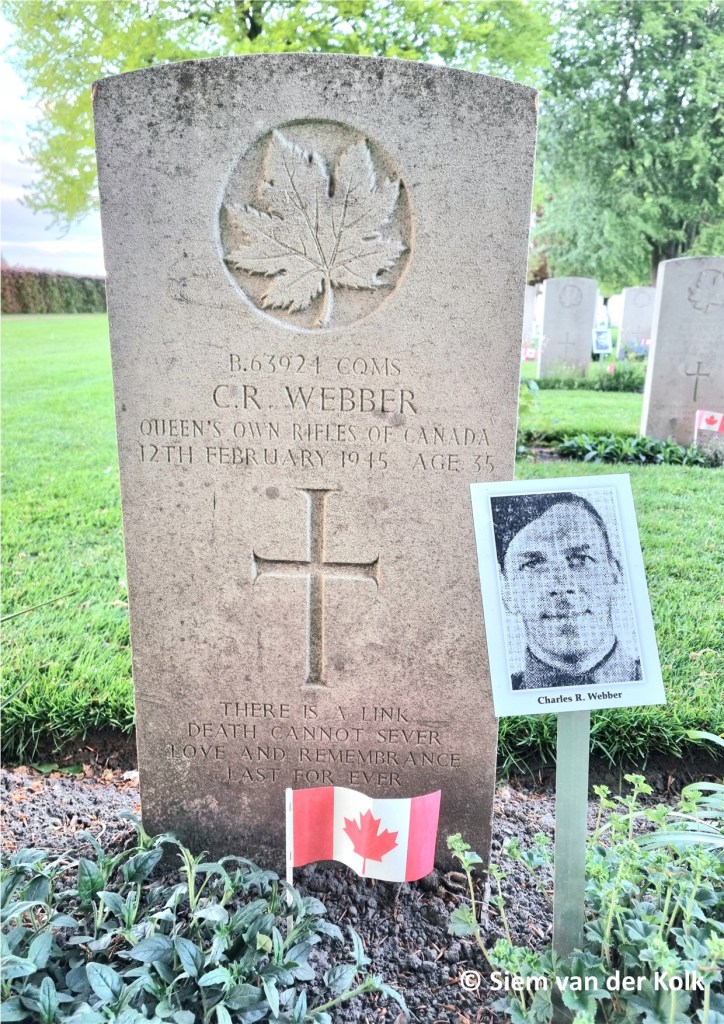
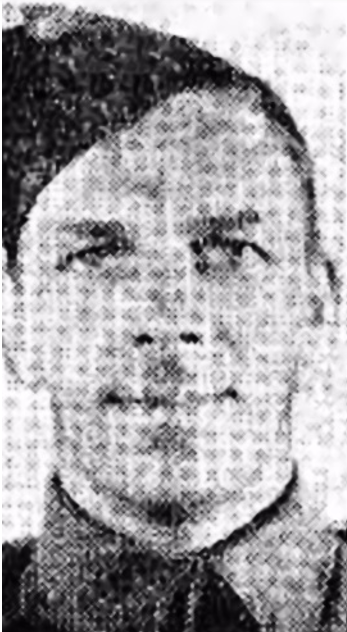
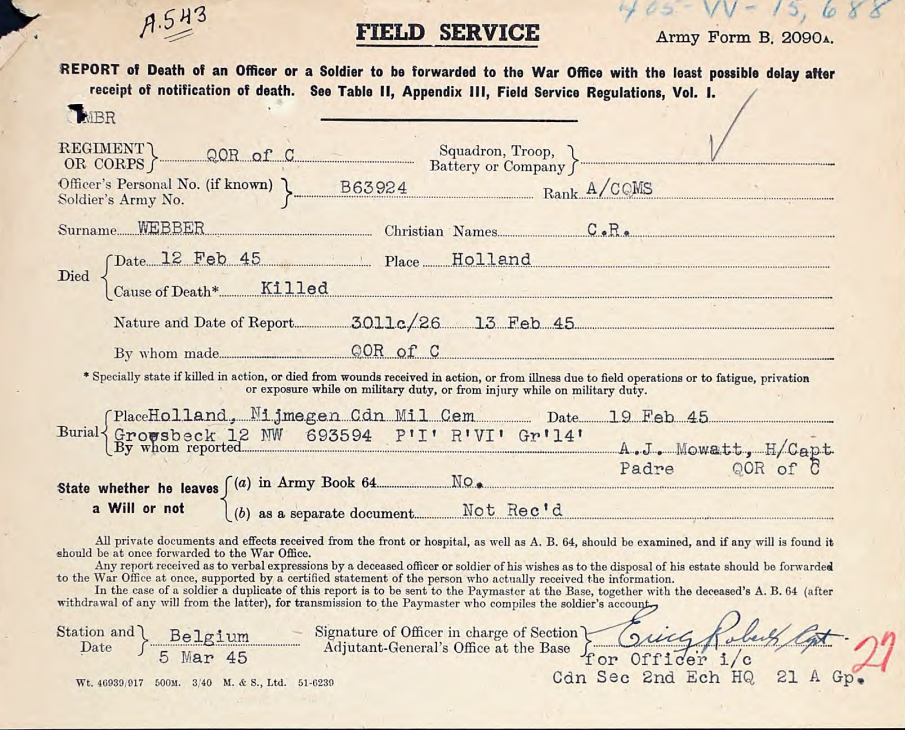
On 12 February at 06:00 hrs, the Royal Canadian Engineers were installing smoke pots on the dike, so the enemy would have difficulty seeing what was happening on this side of the river. Supplies regularly arrived by Dukws. On this day, 2 sergeants were also killed: Company Quartermaster Sergeant Charles Robert Webber and Sergeant Harold Payne. Sergeant Webber was a quartermaster in the intendance and was thus involved in relocations. The exact location where Webber was killed is unknown; since he was a quartermaster, it is possible he was killed outside Millingen. Sergeant Payne was tasked with preparing a place where the Dukws could unload their supplies. The high water made this more difficult. On 16 February, Commander S.M. Lett wrote a letter to Payne’s girlfriend. Commander Lett was clear about the cause of death: Payne was killed in Millingen by a fragment from a German shell. The bodies were transported away in the same Dukws that brought the supplies. They were buried at the temporary Canadian cemetery in Jonkerbos.
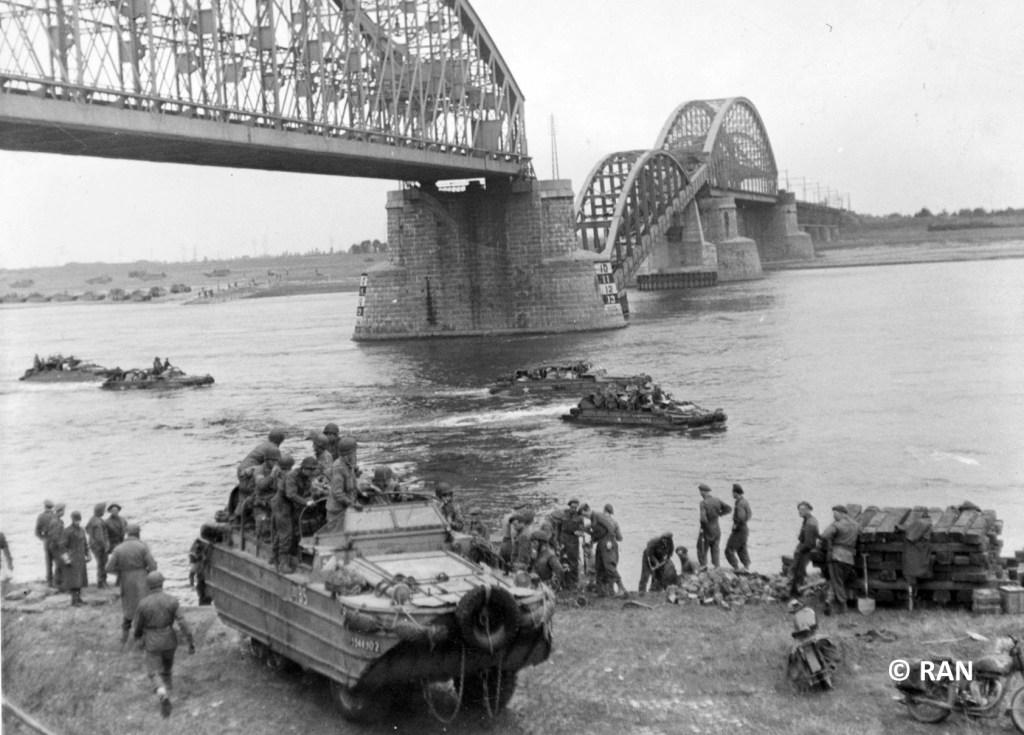
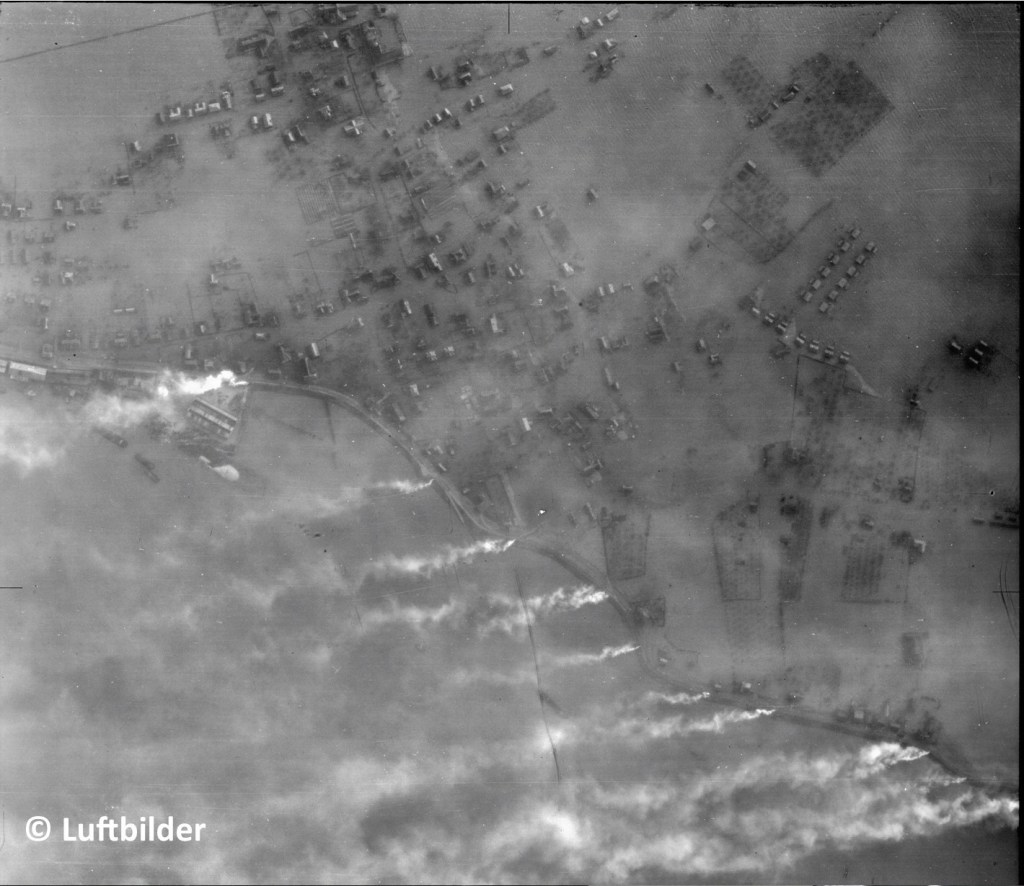
On 13 February at 08:00 hrs, two soldiers were on guard at the Rhine to prevent Germans from crossing the river. Company B had captured a civilian who lived on the island (Schenkenschanz) opposite the company. The land was searched, but nothing was found. At 15:00 hrs, Company A reported that civilians were crossing the Rhine in a boat and waving a white flag. They were captured by Company A at the shipyard and interrogated two days later in “Wacht am Rhein” by Belgian officers. The Engineers had prepared the smoke pots and immediately ignited them. The opposite bank of the Rhine was no longer visible due to the smoke.

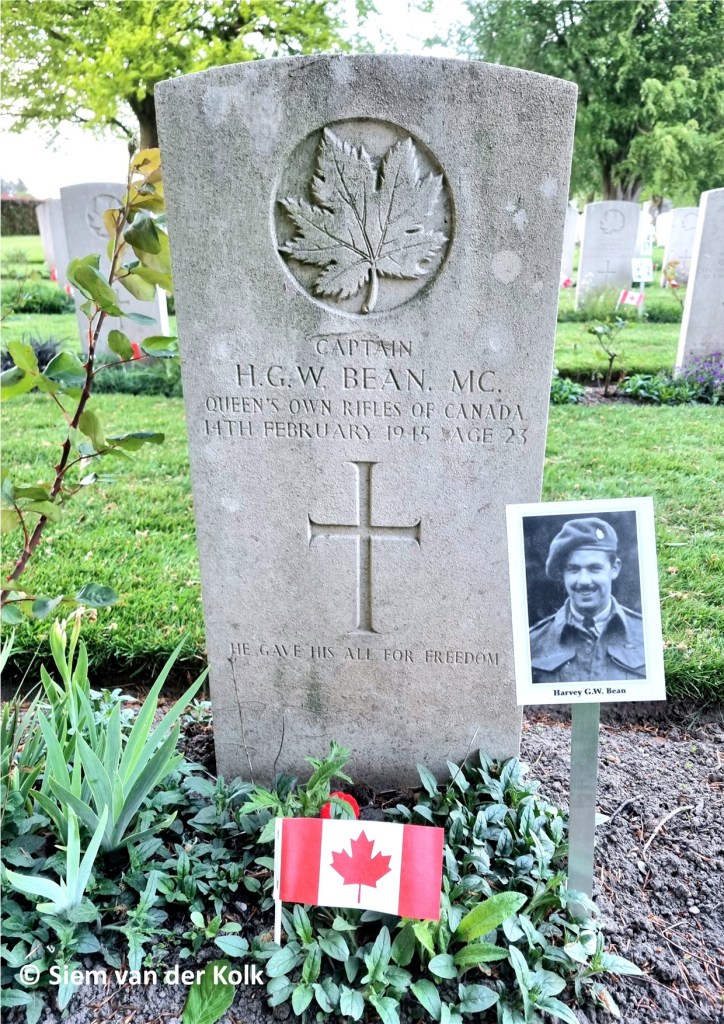
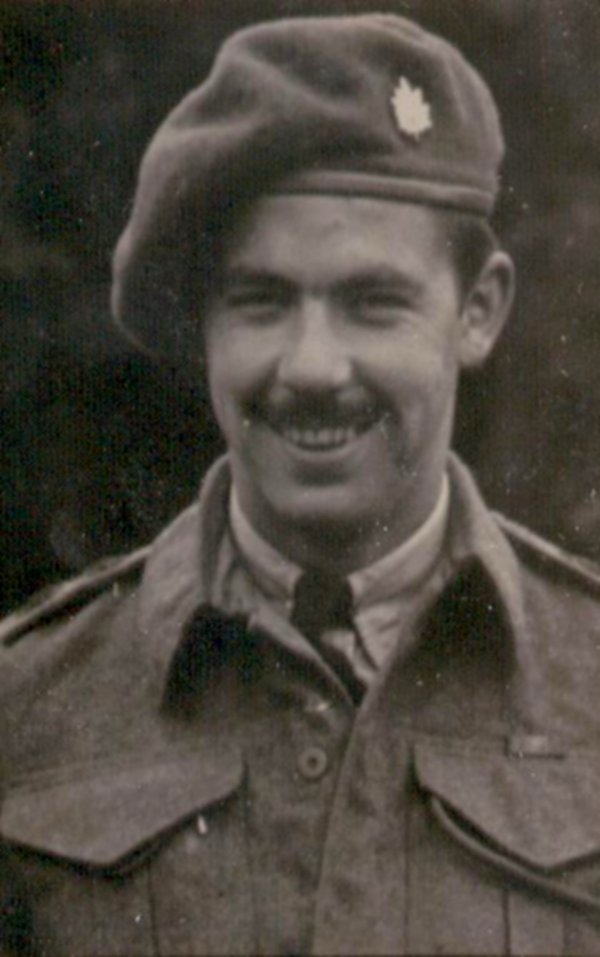
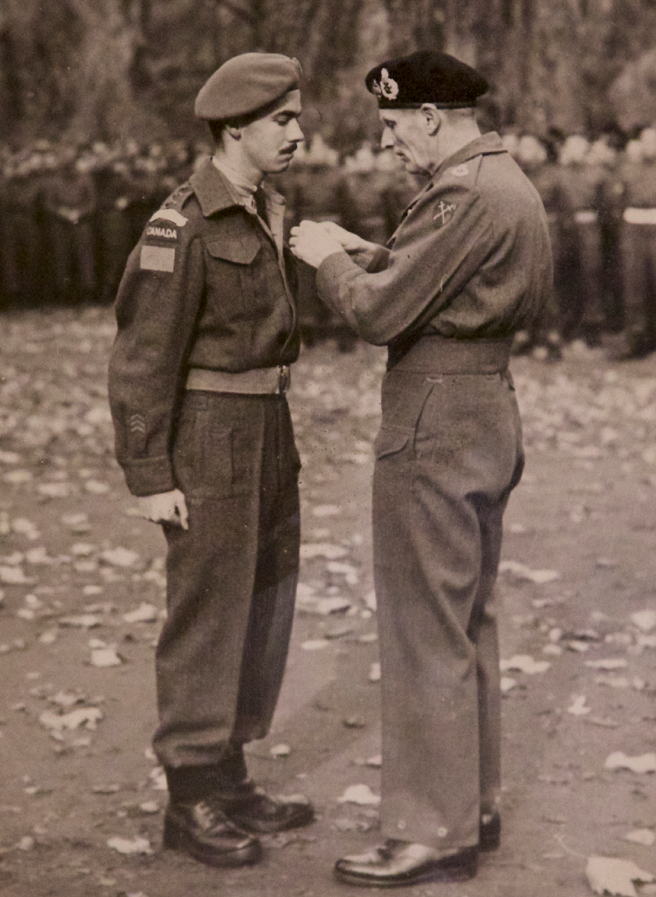
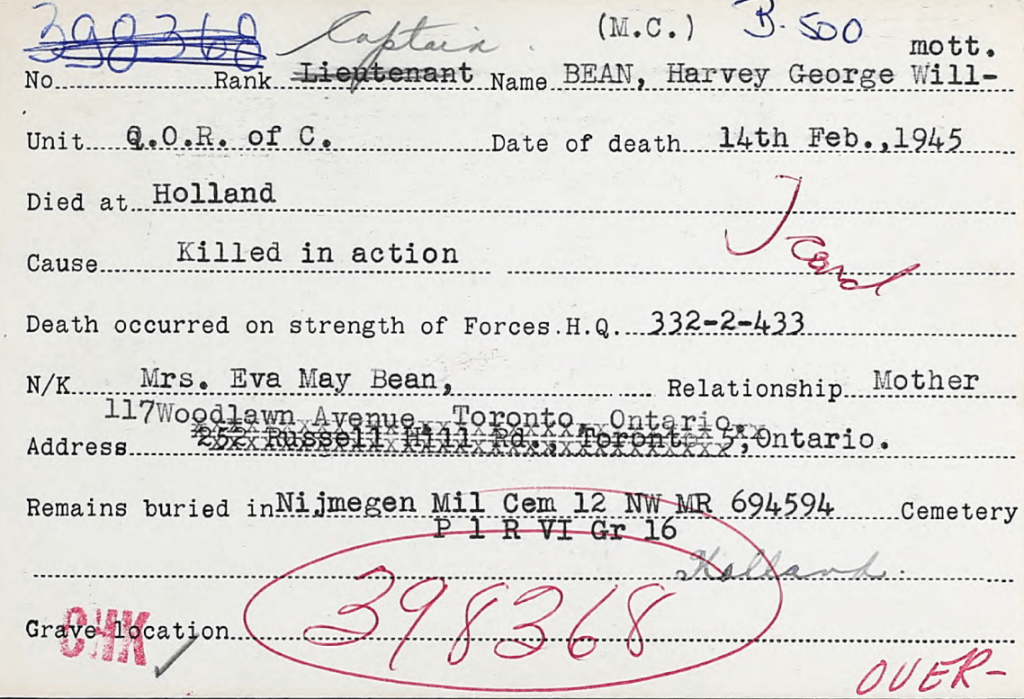
On 14 February, the headquarters moved back to the town hall in Millingen. At 07:30 hrs, more than 300 enemy shells were fired at Millingen. Captain Bean, deputy commander of Company C, was killed. Bean was likely killed near the town hall in Millingen. The town hall sustained multiple direct hits. Company A also took multiple direct hits at the shipyard, resulting in three wounded: Corporal A.D. Atkinson and soldiers E.V. Chilton and J.W. Chilton. The wounded were evacuated by the 23rd Canadian Field Ambulance stationed in Beek. Later that day, Company A reported that two boats carrying civilians crossed the Rhine. One of the boats contained a Millingen skipper’s family. They were captured by Company A and placed in “Wacht am Rhein”.
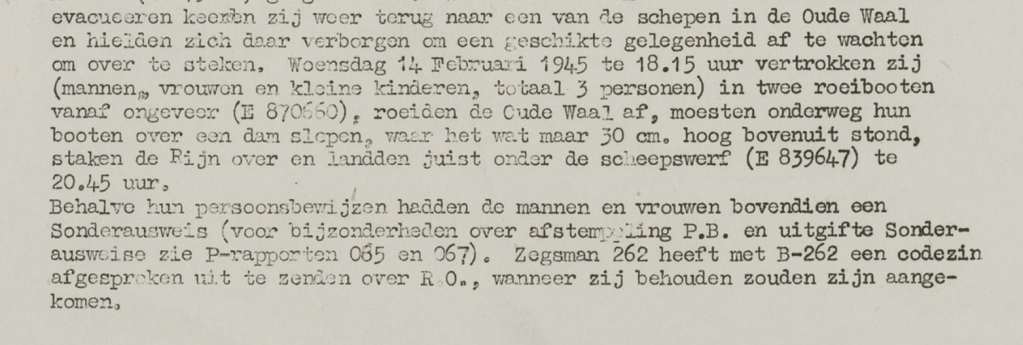
On 15 February, those captured on 13 and 14 February were interrogated by the Canadians. At 10:55 hrs, Company B came under enemy fire, and when things quietened down, Company B retaliated.
On 16 February, it was reported that the water was still receding. The Royal Engineers stopped creating the smoke screen on the dike because the water had dropped enough for the companies to move back into the houses.
On 17 February at 09:00 hrs, Company A spotted a ship heading towards the Lower Rhine. It was decided to fire small arms at the ship. A fire soon broke out on board. Captain Frens, a Forward Observation Officer (artillery observation officer, a FOO), came to Millingen to observe German movements across the Rhine.
On 18 February at 01:00 hrs, an enemy patrol was suddenly spotted. It was thought to be 8 men strong. They entered Company A’s area. Immediate action was taken and the ship was sunk.
On 19 February at 00:25 hrs, booby traps on the dike suddenly went off. Company A immediately reacted and opened fire with LMG. At 17:55 hrs, another boat passed Millingen. Fire was immediately opened with an LMG on the boat. There was no return fire from the boat, but the MG42 on the opposite bank of the Rhine immediately retaliated against the LMG fire. On the evening of 19 February, the QOR was relieved by the 7th Hampshire Regiment, part of the 130th Brigade of the 43rd British Division. The British were to guard the Rhine until 1 March.
On 23 February, another enemy patrol was about 400 metres from Ferns’ post, attempting to cross the river. The end result was 2 dead Germans and 5 German prisoners of war.
The soldiers who died at Millingen in February 1945.
All three soldiers killed were buried on 19 February 1945 at the temporary Canadian cemetery in Jonkerbos. In August 1946, the families received a letter stating that the remains had been carefully exhumed and reburied at the new honour cemetery: Groesbeek Canadian Military Cemetery. Bean lies in grave 5, row D, plot I. Payne lies in grave 13, row B, plot I. Webber lies in grave 1, row D, plot I.
Harvey George Willmott Bean.
Harold Payne.
Charles Webber.
Sources: Library and Archives Canada, NIMH, QOR Museum, Hans van der Wiel, Private archive Siem van der Kolk.
 Millingen in oorlogstijd
Plaats een reactie