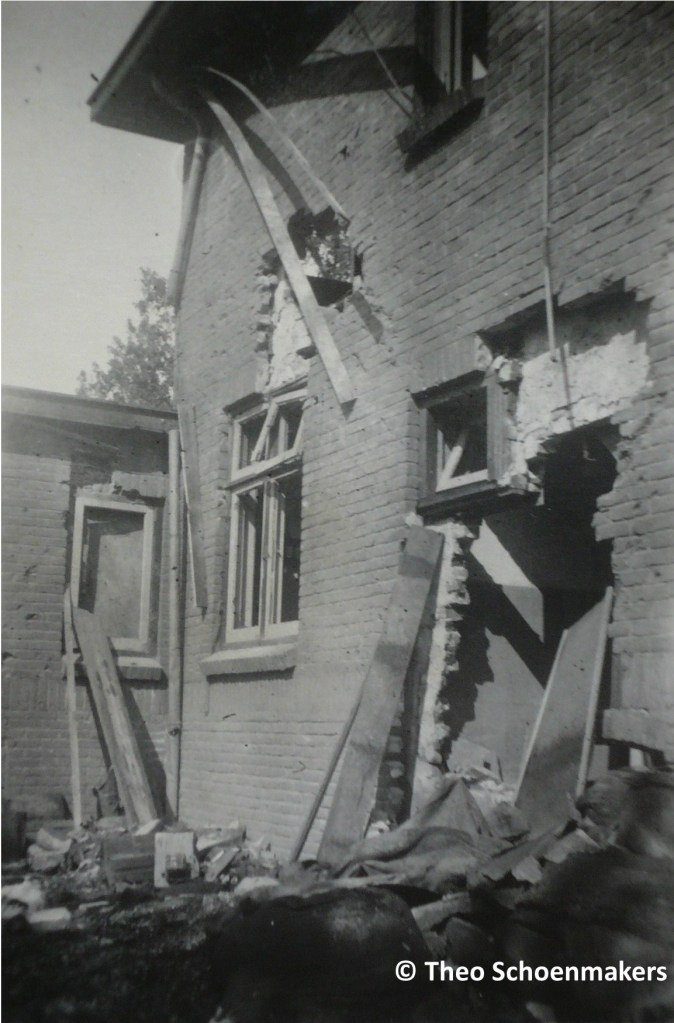
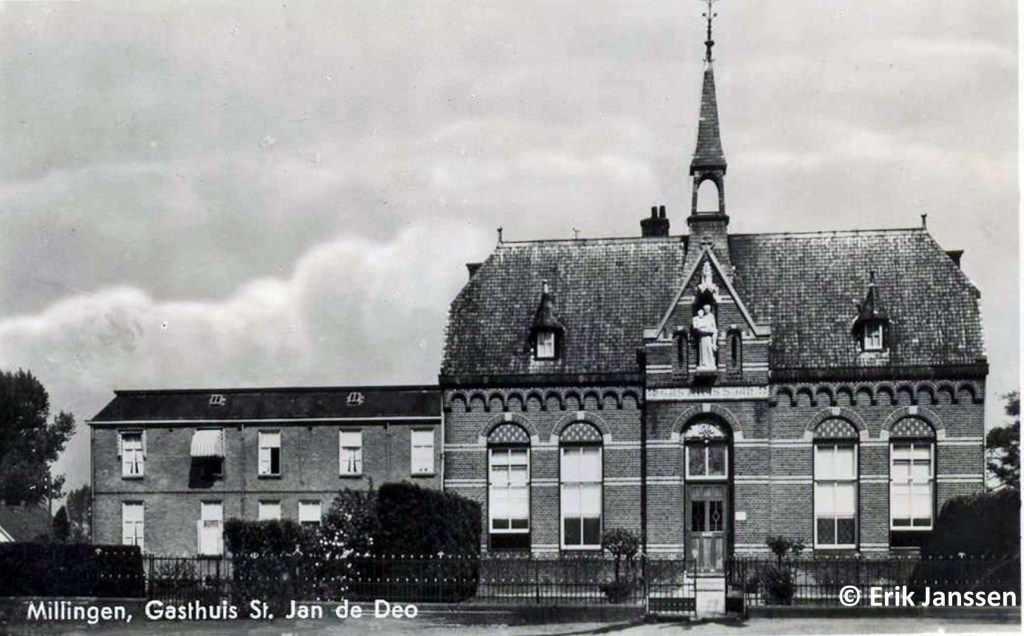
On 17 September 1944, Operation Market Garden began. The Allies landed at Eindhoven, Groesbeek, and Arnhem. From Millingen, people could see the paratroopers and gliders descending over Groesbeek. Throughout the month, the airspace over Millingen was busy with Allied and German aircraft. Many air battles could be seen over Millingen. Many people enjoyed watching them, and in the evenings one could also see the tracer paths of the bullets. The Allies pushed further into the Ooijpolder. Soon, news reached Millingen that the Allies were in Erlecom. In Millingen, people expressed hope that they would be liberated by the Allies within a few days, but that hope quickly faded when the Allies did not advance further into the Ooijpolder, causing Millingen to suddenly be close to the front. In the days after Market Garden, there was much German activity in the village. Every day, the Germans fired artillery from Millingen towards Erlecom, causing the Americans to fire back towards Millingen. Because it also became increasingly dangerous in the evenings, people had to build air raid shelters in their own gardens. The shipyard provided steel plates for this purpose. The Germans ordered that everyone must have at least one foxhole at their home. Millingen came under increasing artillery fire from the Allies, resulting in many houses being destroyed or damaged. On 1 October 1944, a house in Klein Amerika received a direct hit. The shell entered through the kitchen window. Wilhelmus Koppers, Anna Wanders, and Helena Everdina were found badly injured by neighbours. A few hours later, all three succumbed to their injuries. The Germans carried out almost daily attacks from Millingen on Erlecom/Leuth. They often left in groups of 50 soldiers, and often 70% did not return to Millingen. The Red Cross was busy transporting the wounded. They therefore set up the hospice (St. Jan de Deo) to receive the wounded.
The Day of the Evacuation.
On 18 October 1944, the Germans ordered that Millingen be vacated within 48 hours. If you were not gone within 48 hours, the Germans would “help” you. The Germans posted the announcement in the village that everyone must leave within 48 hours, and several NSB members went door to door to deliver the message. Many people in Millingen began packing the belongings they could take, and most buried valuables in their gardens or placed them under the floor in their homes.
On 20 October 1944, the day arrived when everyone had to leave Millingen. Most people had decided to leave only on the last day. Those travelling with horse and wagon were allowed by the Germans to cross at the ferry at Emmerich (where approximately the Emmerich bridge is now). The rest had to use the pedestrian ferry at Millingen to cross the Rhine. Millingen had 3 ferries: one right at the border with Bimmen, one ferry where the “Kievits” ferry is now, and one near the Molenkolk – the Van Wijck pedestrian ferry. The ferry at the border was the busiest, as it was the closest to Lobith. Everything was still done with rowboats, which could not hold many people, resulting in people sometimes waiting for hours until they could cross the river. Most people from Millingen went towards the Achterhoek, and some even further, towards Friesland or Groningen.
Evacuation of the Hospice St. Jan de Deo.
In Millingen, there were no more civilians to be seen, only German soldiers and a few boys from Millingen who were allowed by the Germans to stay to care for the livestock. Three weeks after the evacuation, on 12 November 1944, the Germans ordered that the hospice, with its 200 sick and elderly people, also had to be evacuated. The Germans organised the evacuation themselves. At 07:00 hrs, the first German trucks and Red Cross vehicles were at the door. All day, hard work was done to get everyone out. The trucks and Red Cross vehicles crossed the Rhine at the ferry at Emmerich, heading towards Harreveld. Around 16:00 hrs, the last vehicles departed towards Emmerich. It was only on 20 November that the hospice staff left.
Sources: Private archive of Siem van der Kolk.
 Millingen in oorlogstijd
Plaats een reactie