Armstrong Whitley MK V, serial no. T-4203 of No. 78 Squadron.
On January 9, 1941, at 23:18 hours, a British bomber crashed burning on the ice in the “Kattenderm” in the Millingerwaard near the Lange Paal, between Millingen and Kekerdom. It was a twin-engined Armstrong Whitley MK V, serial no. T-4203 of No. 78 Squadron in Dishforth in Yorkshire.
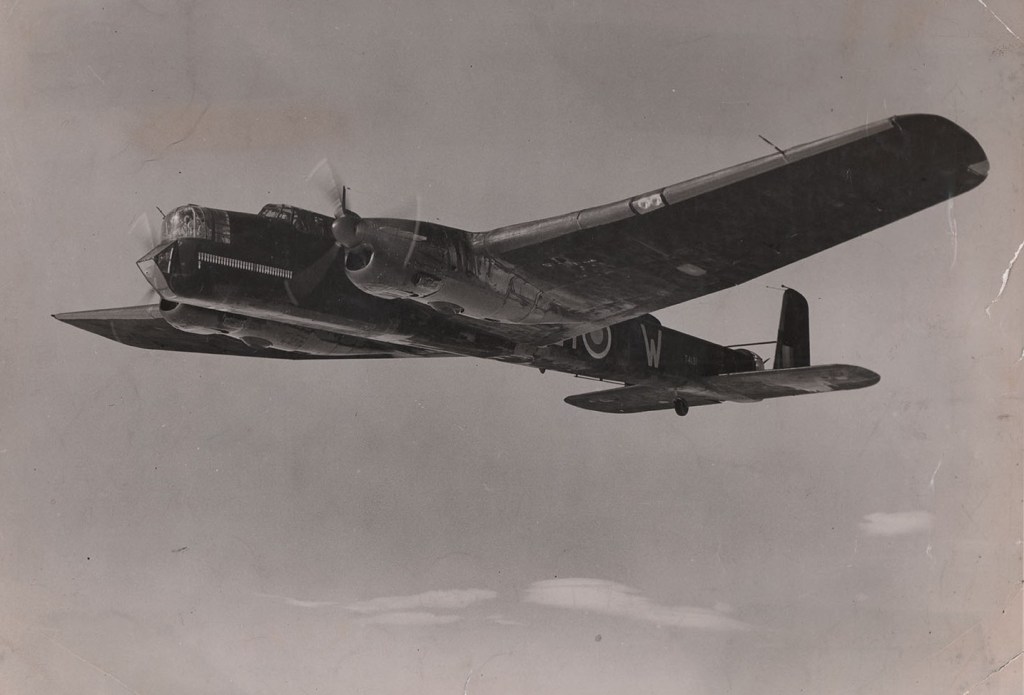
Intercepted on the way back.
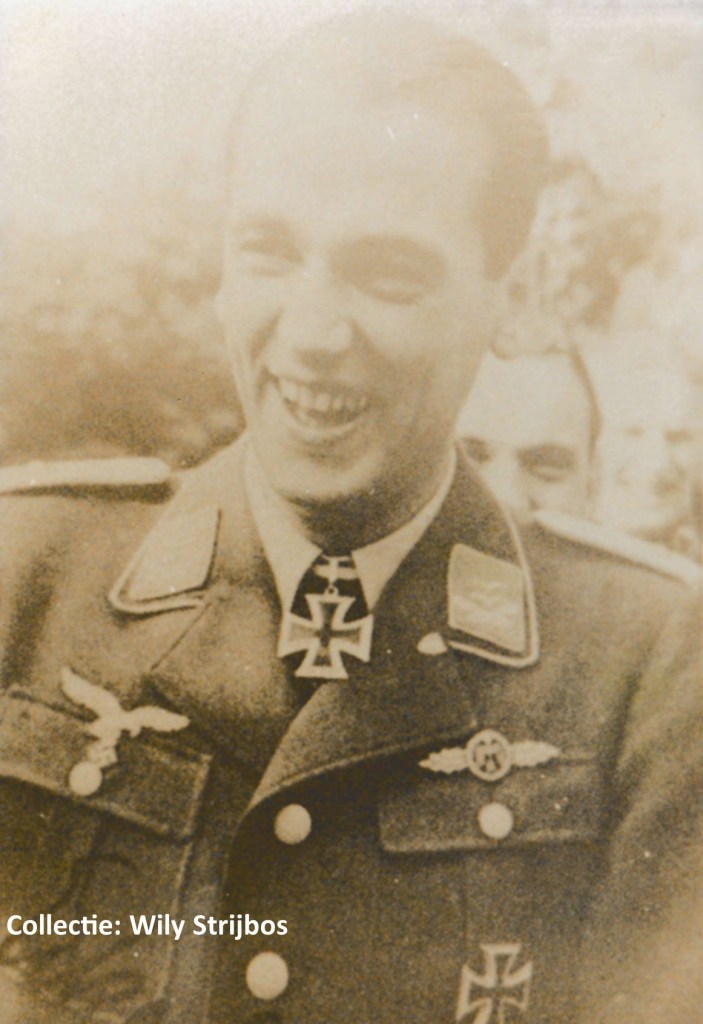
The aircraft had departed earlier that evening at 17:57 from Dishforth for a night bombing raid on the oil refinery of Gelsenkirchen in the Ruhr area, and after more than five hours of flying, it was now on the way back. It is plausible that the pilot followed the Rhine as a silver ribbon in this clear night to find the way back to the base in eastern England. Unfortunately, he was spotted by a German Messerschmitt BF 110 night fighter. The pilot of this night fighter, Oberleutnant Reinhold Eckard, was part of the 6th Staffel of Nachtjäger Gruppe I, with home base at Deelen airfield near Arnhem. The fast German night fighter saw the slow bomber approaching and could easily shoot it down. This was also Eckard’s first night victory. The bomber smashed onto the ice and all five crew members were killed. On January 12, 1941, these deceased crew members were buried by the German occupier with military honours at the former Protestant cemetery on Zeelandsestraat in Millingen aan de Rijn. In 1947 their remains were transferred and reburied at the military war cemetery of the Commonwealth War Graves Commission in Mook, grave numbers IV-B-8 through IV-B-12.

Eyewitness report
Jan Awater describes the incident with the aircraft in a letter from May 1985, addressed to Wily Strijbos. He lived during the crash of the aircraft along the Millingsedam (now Waiboerweg):
“What I also remember is the shooting down of an English bomber on January 9, 1941. It had already been restless in the air all evening, among other things planes, flak guns (I believe that’s what it was called at the time) and searchlights. We had just gone upstairs to go to sleep. Then we heard an aircraft returning from Germany with engine trouble. So we looked out of the dormer window, and it was a Tommy. It was in flames and came straight towards us along the river. A fear overcame us. It was only 100 metres high when it came over our house, turned right into the polder and crashed at the Kattenderm (as that corner was called then). The crew had left the aircraft too late. There were five of them. They lay scattered around the aircraft on the ice, completely collapsed together. It was a disaster.”
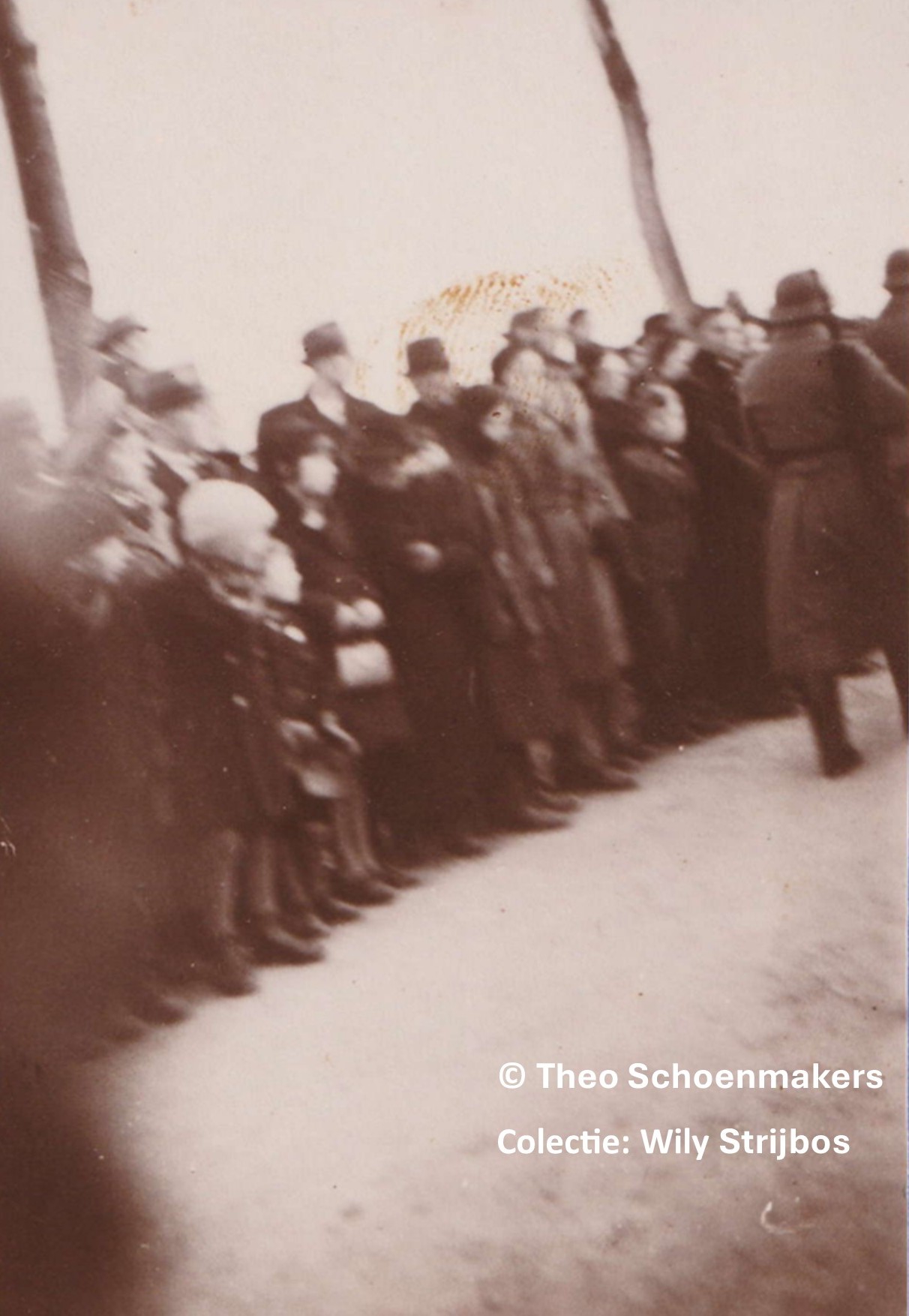
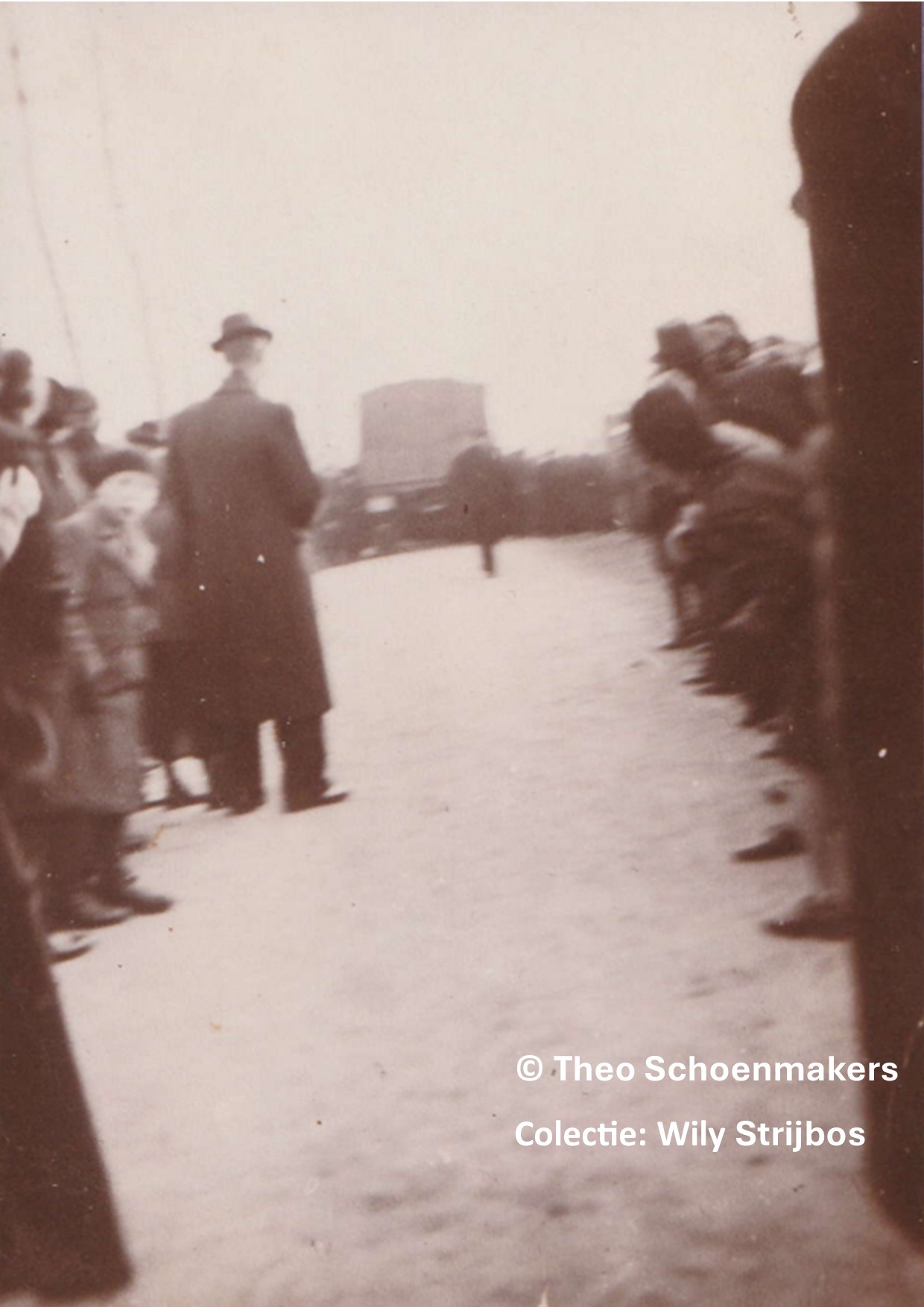
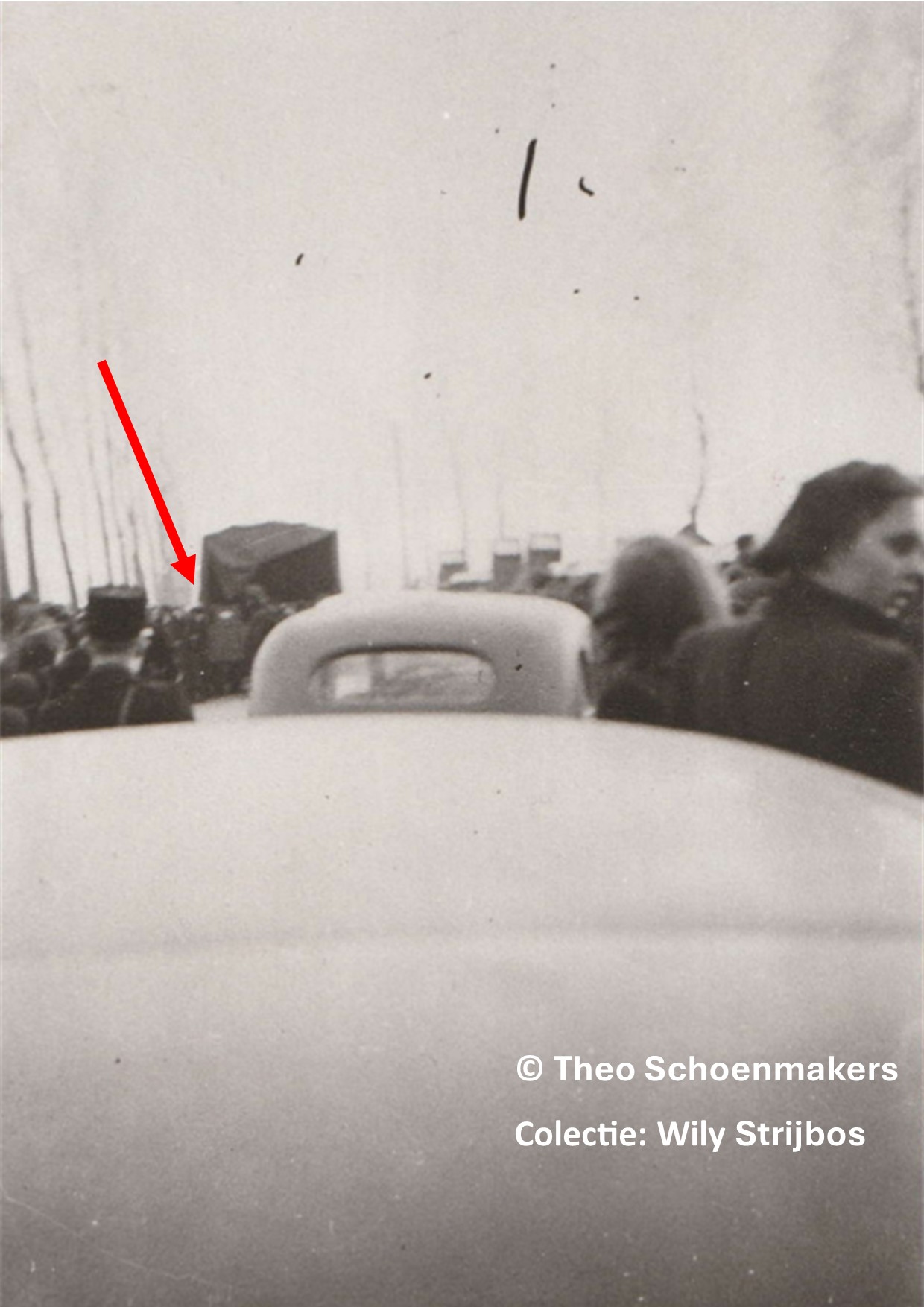
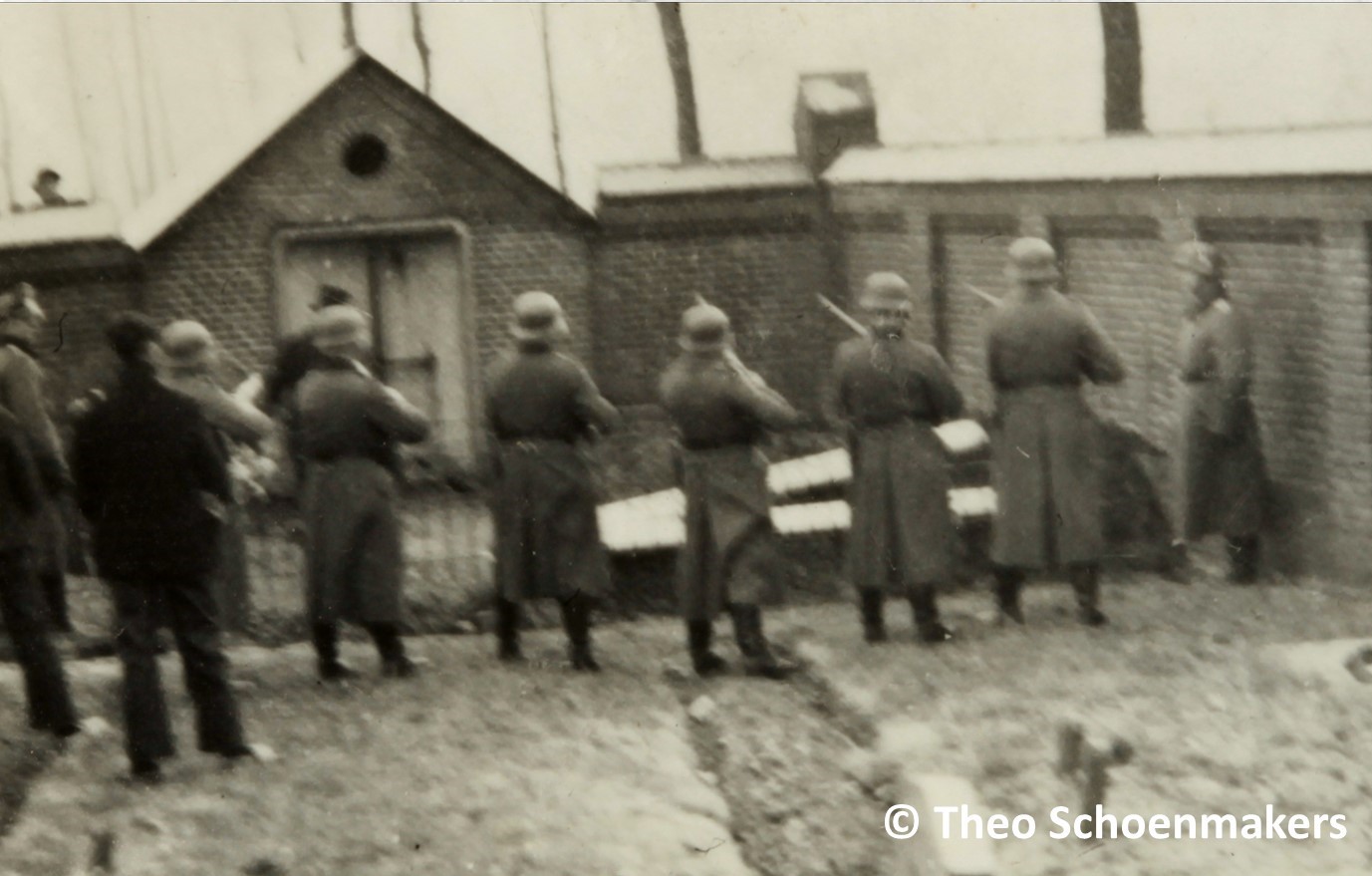
Five Britons killed.
The fallen British crew members:
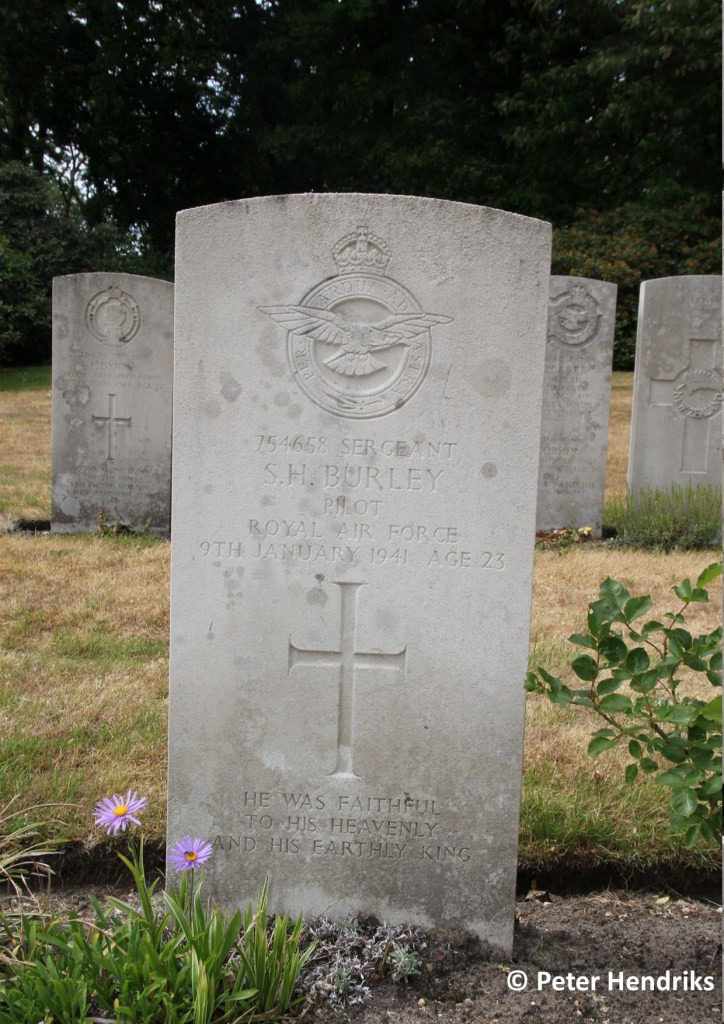
RAF Sergeant, Stanley Hudson BURLEY, co-pilot, 23 years old, No. 754658 (grave IV-B-9), from Great Malvern in Worcestershire.
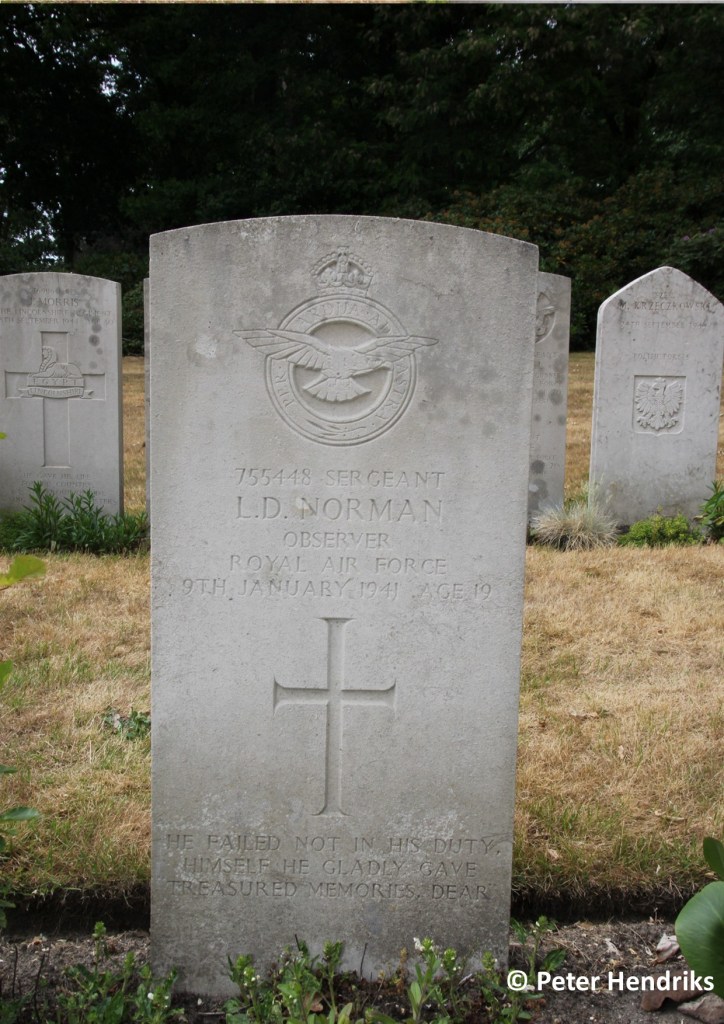
RAF Sergeant, Lawrence Dudley NORMAN, observer, 19 years old, No. 755448 (grave IV-B-10), from Banstead in Surrey.
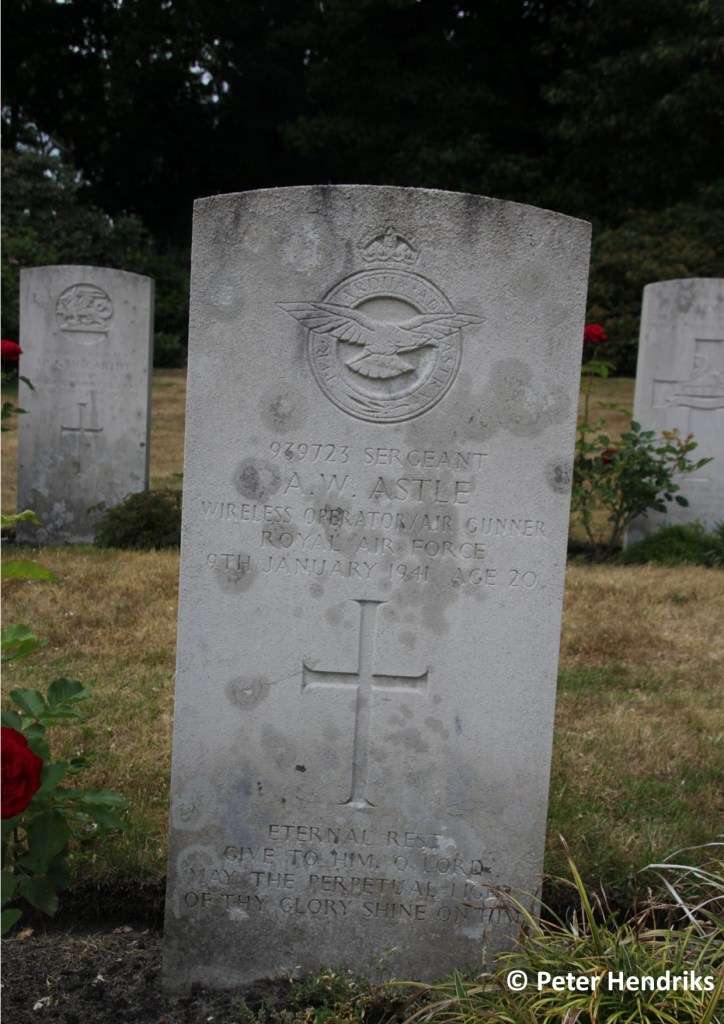
RAF Sergeant, Arthur William ASTLE, radio operator, 20 years old, No. 939723 (grave IV-B-8) from Aston, Birmingham.
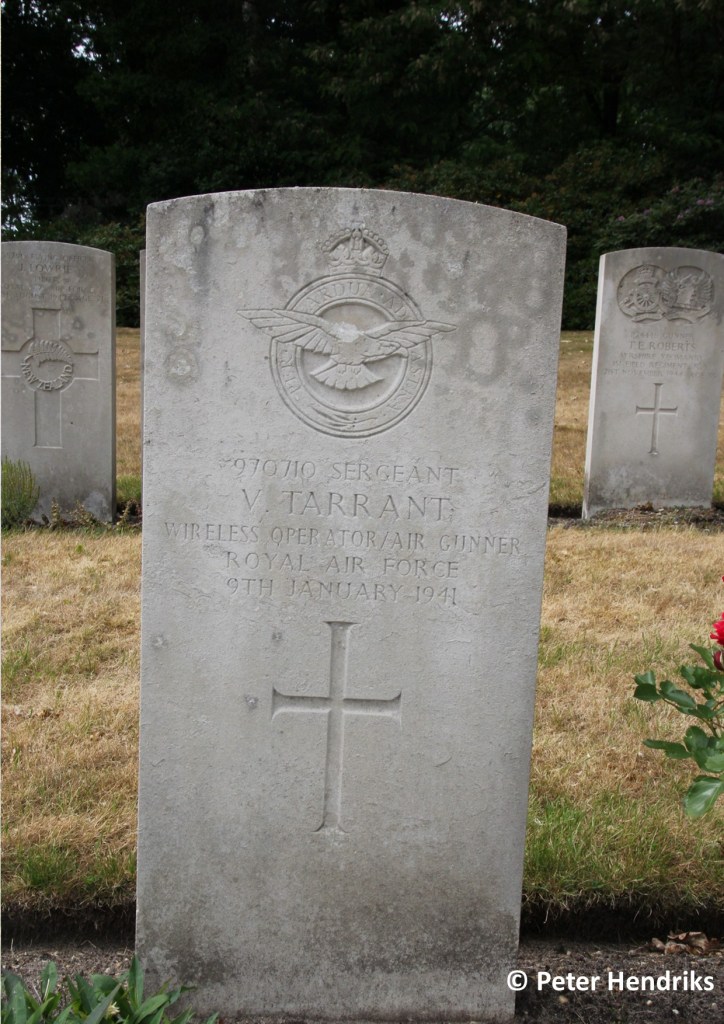
RAF Sergeant, Victor TARRANT, radio operator & air gunner, age unknown, No. 970710 (grave IV-B-11).
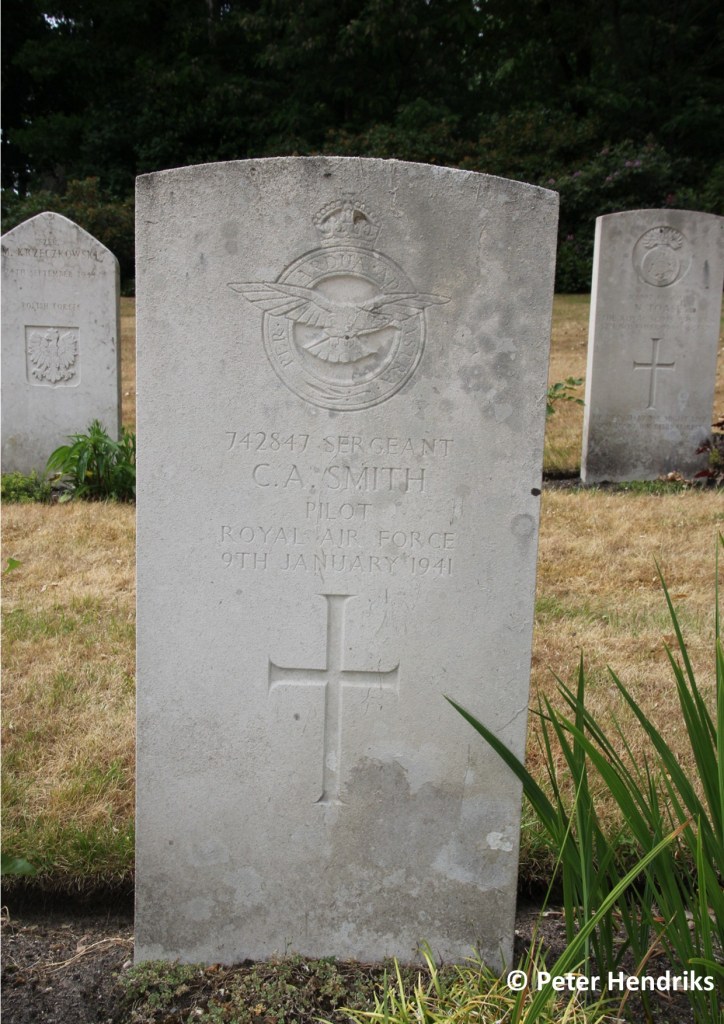
RAF Sergeant, Charles Arthur SMITH, pilot, age unknown, No. 742847 (grave IV-B-12).
Sources: Private archive Siem van der Kolk. Wily Strijbos from the book ‘Kekerdom in bange dagen’
5 reacties op “British bomber crashed in Millingerwaard.”
-
Charles Arthur Smith was a pre war member of the RAFVR having enlisted on 20th January 1939. He conducted his initial pilot training at No. 10 Flying Training School, RAF Tern Hill, between December 1939 and June 1940. He was then posted to No. 19 Operational Training Unit at RAF Kinloss in Scotland. On completion of his operational training he was posted to No. 78 Squadron at RAF Dishforth, North Yorkshire, on the 9th September 1940. Here he took part 14 operations as 2nd Pilot, operations included: MANNHEIM, BOULOGNE, BERLIN, STEID near WILHELMSHAVEN, CHARLOTTENBURG, STERKRADE, BERLIN, WILHELMSHAVEN, TURIN, TEXEL, and an unidentified target in ITALY, the other 2 were both aborted. He finally took command of an aircraft and crew on 2nd December 1940. His first operation as captain was to LORIENT but the aircraft lost power during take-off and ran across the Aldwark Road and crashed. The crew were slightly injured but the aircraft having caught fire was classed as beyond repair. His second operation as captain was also aborted owing to an engine failure, his bombs jettisoned into the sea off the coast of England. On the 16 December he attacked MANNHEIM and then on 19 December he attacked a concentration of searchlights on the Dutch coast. His last operation of 1940 was an attack on the harbour and shipping at CHERBOURG on 28 December 1940.
1941 opened with an attack on the ship building yards at BREMEN on 1st January 1941. He was lost on his next operation.
At the time of his death he was 27 years old.
LikeLike
-
Sergeant (Wireless Operator AIi Gunner) Victor Tarrant was born in Swords, Ireland on 4th January 1902. He was employed as a Barman and enlisted initially on 29th June 1920 and saw service in Turkey during the interwar years. He left the regular RAF and was assigned to the Reserves on 28th June 1932.
He reenlisted on 30 October 1939 as a Wireless Operator (Ground) and posted to RAF Yatesbury, Wiltshire. He then volunteered for air crew duties and was sent to RAF Manby for air gunner training on 15 July 1940. Passing out as a Wireless Operator Air Gunner on 6 July 1940 he was posted to No. 10 Operational Training Unit at RAF Abingdon, Oxfordshire and then to No. 78 Squadron, RAF Dishforth, North Yorkshire on 9th September 1940.
He took part in operations to BOULOGNE, BERLIN, BERLIN (Aborted), ROTTERDAM, AMSTERDAM, COLOGNE, NEERSEBURG, TURIN (Aborted before take off), OSNABRUCK, OSNABRUCK, HAMBURG, GLADBECH, POLITS (aborted) and BREMEN.
He was lost on his second operation with Sgt Smith. He was 39 at the time of his death.
LikeLike
-
The Second Pilot, Sergeant Stanley Hudson Burley was born in Tendring in Essex but the family later moved to Malvern in Worcestershire. He had only joined the Squadron in December of 1940 and flew his first operation with the Squadron on 1st January 1941 with the Smith crew. He was lost on his second operation.
LikeLike
-
Sergeant (Observer) Lawrence Dudley Norman was a prewar regular member of the RAF and served as an Observer as a LAC before being promoted to Sgt. He had joined No. 78 Squadron in October 1940 at RAF Dishforth, North Yorkshire. Usually flying as the Observer in Sgt W C Wilson’s crew; this was his only operation with Sgt Smith. He was on his 8th operation to GELSENKIRCHEN at the time of his death, his targets were primarily oil refineries but on all bar one occasion they were unable to identify the primary targets and attacked secondary targets at OSNABRUCK (twice), a RAILWAY JUNCTION NEAR HAMBURG, GLADBECH, and a planned attack on MERIGNAC AERODROME at BORDEAUX. The remaining 2 operations were both aborted, once due to engine failure and once with a failure of the electrical system.
LikeLike
-
Sergeant (Wireless Operator Air Gunner) Arthur William Astle, was born in Birmingham on 12 September 1920 and enlisted at No. 2 Depot, RAF Cardington, on 28th September 1939. He originally was selected for pilot training but failed the initial assessment and was reassigned as a Wireless Operator Air Gunner and moved to RAF Yatesbury in Wiltshire. Having completed his wireless operator training he was sent to No. 7 Bombing & Gunnery School, where he qualified as a Wireless Operator Air Gunner on 27th July 1940. He then moved to No. 10 Operational Training Unit at RAF Abingdon, Oxfordshire on 28th July 1940. He then spent three weeks at No. 5 Bombing & Gunnery School, before joining 78 Squadron at RAF Dishforth on the 28th September 1940.
His first two operations were aborted, one due to mechanical issues and the second when his aircraft collided with a flare path tender. His first successful operation on 29 October 1940 saw him attacking an alternate target at OSNABRUCK. He returned to OSNABRUCK on 13th November 1940. He did not operate again until he joined Sgt Smith’s crew and attacked BREMEN on 1st January 1941. He was lost on his fourth operation.
LikeLike

 Millingen in oorlogstijd
Plaats een reactie