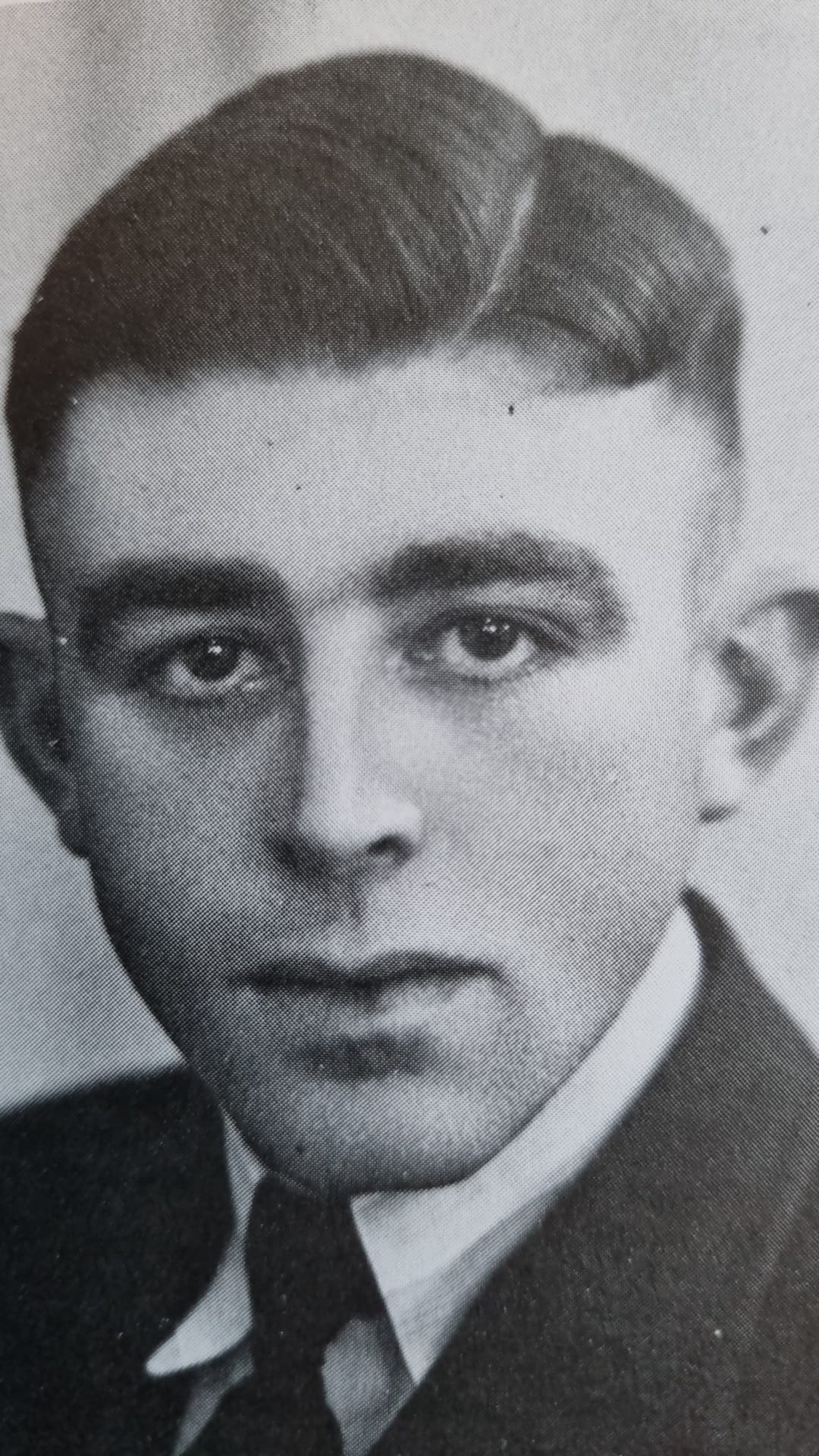
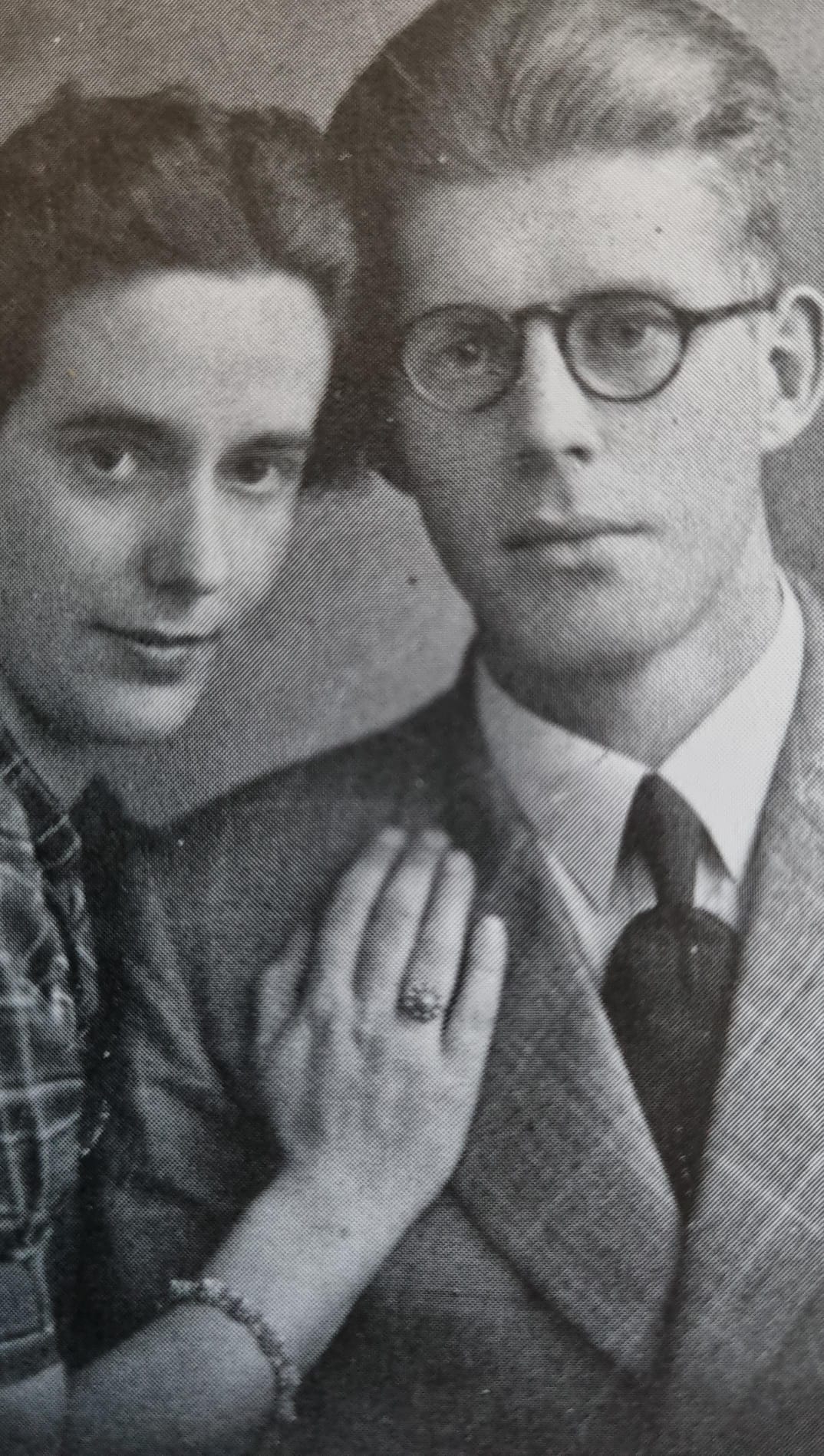
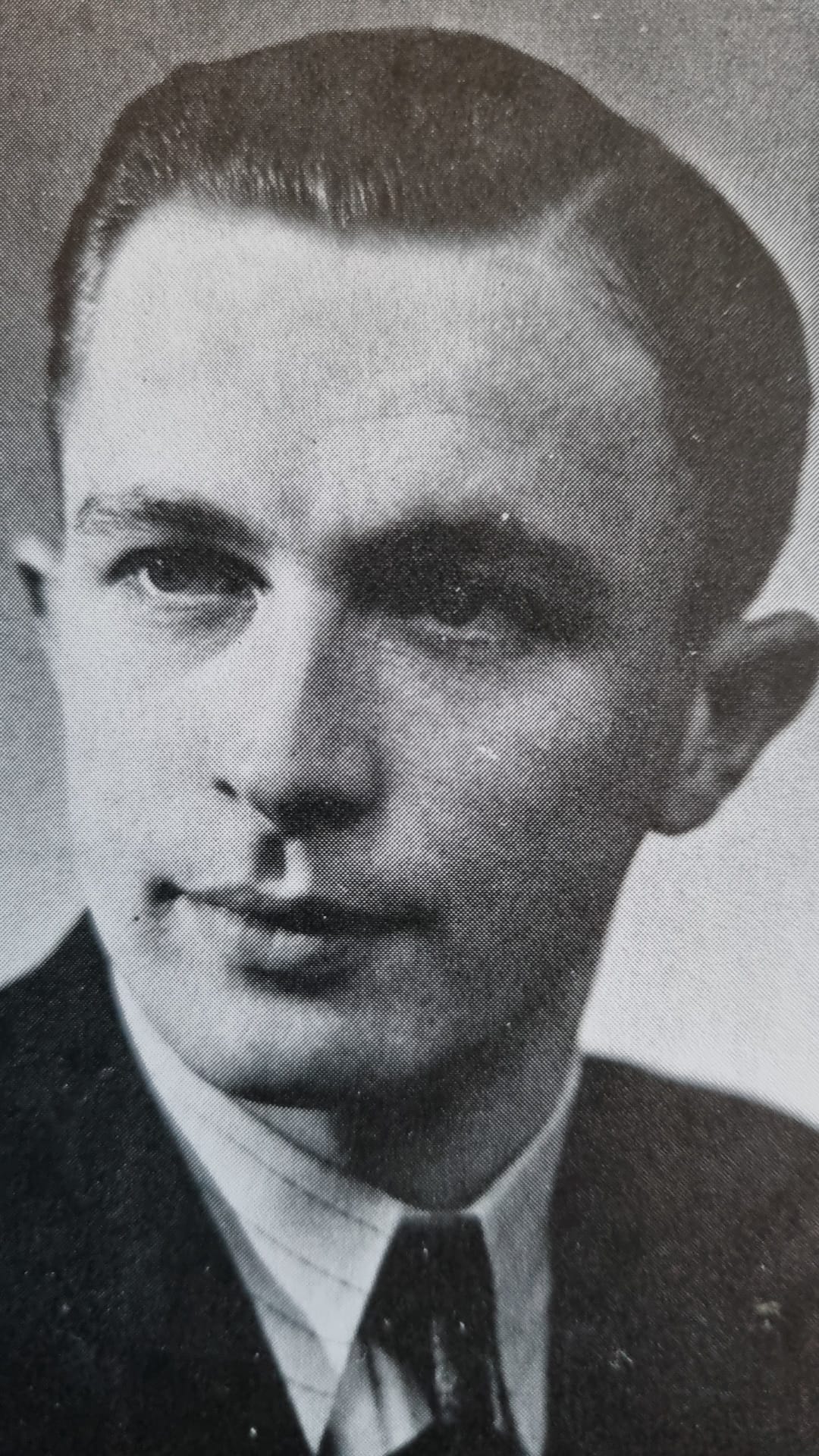
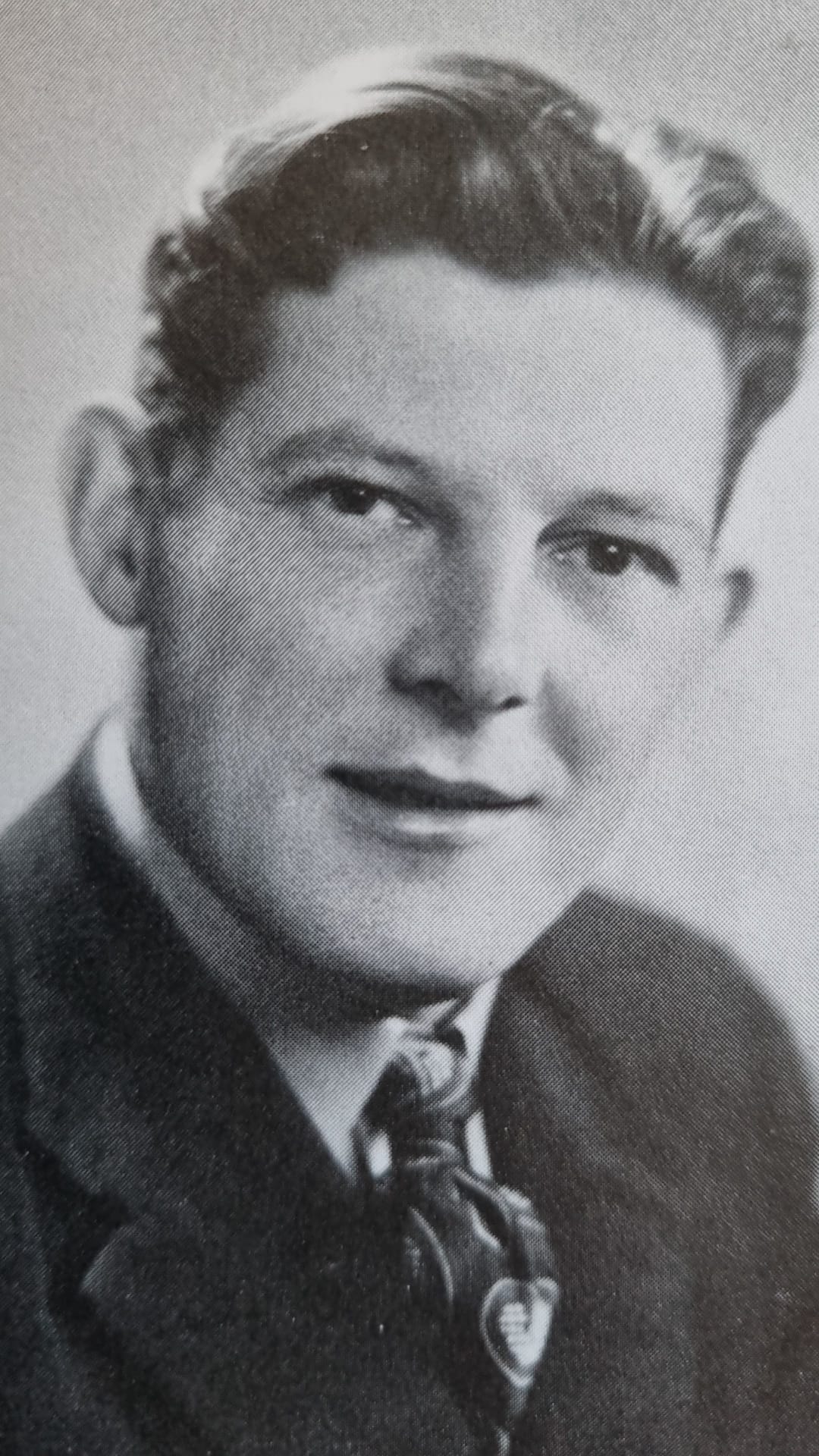
Arnold Hendriks, Leo Hanssen, Arnold Raats, and Jan Thunnissen were deeply involved in helping people in hiding. Arnold and Leo were arrested on May 1, 1943, because of the strike. With their return, the resistance in Millingen did not stop. Arnold, Leo, Arnold R., and Jan were determined to keep helping, especially now that more and more people had to go into hiding. They arranged hiding places and brought people to safe locations, often in areas such as Gent, Doornenburg, Angeren, and Huissen. Jewish people in hiding were also helped, and the resistance group risked their lives daily to protect others.
English Soldiers.
In October 1944, they received a tip from Piet Peters in Lobith that there were two English soldiers at the brick factory there. They had been captured at the bridge in Arnhem, housed behind Emmerich, and had escaped from there. Arnold and Leo set out to pick up the soldiers. It was agreed with Piet that they would collect the English soldiers because Arnold knew the area around the Bijlandt well. He decided to go with Leo Hanssen. First, they had to go to the Van Raaij family, who would help them with a horse and cart to transport the English soldiers. On Saturday, Leo and Arnold set off on their bicycles along the dyke toward the ferry. When they arrived on the other side of the river, they saw the two English soldiers already standing behind a barn—tired faces but alert. Their clothing was immediately noticeable: they wore overalls that were too small for their build, probably because the Germans had forced them to wear other clothes so they would look less conspicuous. Leo, who spoke English well, quickly instructed them to take off the overalls. The English soldiers were given Arnold’s and Leo’s raincoats to wear over their military uniforms so they would be less noticeable.
They returned to the other side of the river. There, the bicycles were already waiting at the Van Ophuizen family, where Annie, the daughter of the family (and later Arnold’s wife), was watching curiously. The situation was too urgent to chat. Without wasting time, they rode with the English soldiers on the back to Jan Thunnissen’s farm in Kekerdom, a strategically located place close to the dyke. Although they were stopped, the first part of the journey went well. The second part had already been prepared. A boat was lying on the shore, and Jan’s father took care of the oars. On Sunday evening, it was decided: the crossing would take place at night. But the moon was too bright in the sky, and on both sides of the river, German soldiers were on watch. It became too dangerous to depart. So they had to wait until Monday night—the ideal time to make the crossing with as little risk as possible.
On Monday night, the time finally came. The English soldiers quickly put on neat Sunday suits to hide their military uniforms. They set off: two English soldiers, two people in hiding, and Jan’s nephew from the Ooij, who knew the route over the water to the Ooij well. The group went to the Klaverland brick factory, where a boat was ready. The crossing would take place in the darkest hours of the night. The crossing went well, though there was a brief moment of panic when they were almost discovered by a German patrol. Fortunately, they kept calm and reached the Ooij, near Dekeling’s grocery store.
Jewish People in Hiding at Van der Velden’s.
In January 1942, the Jewish Halberstadt family went into hiding with Hent van der Veld at Rijndijk 22. The family had previously been in hiding with other people, but it had become too dangerous there. The Halberstadt family consisted of six people: Mr. Louis Halberstadt, Mrs. Juul Halberstadt, little daughter Bettie Halberstadt, little son Victor Halberstadt, and Juul’s father and mother. The father and mother stayed for only two months and then left again. The mother could no longer control her fear and nerves, which created an unsafe situation. They left and returned to Amsterdam. After the war, nothing was ever heard from them again.
In the last years, Hent often had to go to Amsterdam for the underground movement there. Hent had contact there with Louis Halberstadt’s sister.
On May 1, 1943, things became tense when Van der Velden joined the national strike. SS men came to the door, but the Germans found nothing suspicious. Hent’s aunt herself had 20 Jewish people in hiding in her home. Fourteen days after the strike, Hent visited Aunt Ellie in Amsterdam. Upon arriving in Amsterdam, Louis’s sister came to Hent and said: “Get out of here. They just arrested Aunt Ellie with 12 Jews.” Hent quickly left with Louis’s sister and was given two large suitcases.
In 1944, Hent’s house was requisitioned by the Germans because soldiers had to travel with ships to guard the Ruhr area. The idea was that they would be relieved at Hent’s house. Eventually, their house was no longer requisitioned because they were already working for the Wehrmacht. The house next to theirs was now requisitioned, but Hent still had to have his entire house inspected from top to bottom by the Germans. The Halberstadt family was upstairs in the attic behind a partition. It ended well, but everyone was very anxious.
At the end of September 1944, several German soldiers came to the door who were “fed up with the war” and rowed across the Rhine. One night, 12 German soldiers slept in their house. They stayed until the next evening. They spent the whole day falsifying the stamps on their ID cards so they could escape. These were tense hours. Hent stayed upstairs with the Jewish family, directly above them slept the German soldiers. At night, they were awakened by the banging of a rifle. The German soldiers had to be ferried across, and Hent had to lead them to the boat. They sailed to Nijmegen, where they were taken prisoner of war.
On October 20, 1944, everyone in Millingen had to evacuate. Hent evacuated together with Halberstadt to Almelo. The Halberstadt family now lived under the alias Janssen. Hent returned to Millingen on May 20, 1945.
Sources:
Stichting Margot van Boldrikfonds, Familie van der Velden.
Stichting Margot van Boldrikfonds, Arnold Hendriks oorlogs herinneren.
 Millingen in oorlogstijd
Plaats een reactie